Offloaded Inference: Microsoft Unlocks Physical AI Robotics by Moving Compute Off-Robot
擺脫機載限制:微軟研究以「卸載推論」釋放實體 AI 機器人潛能
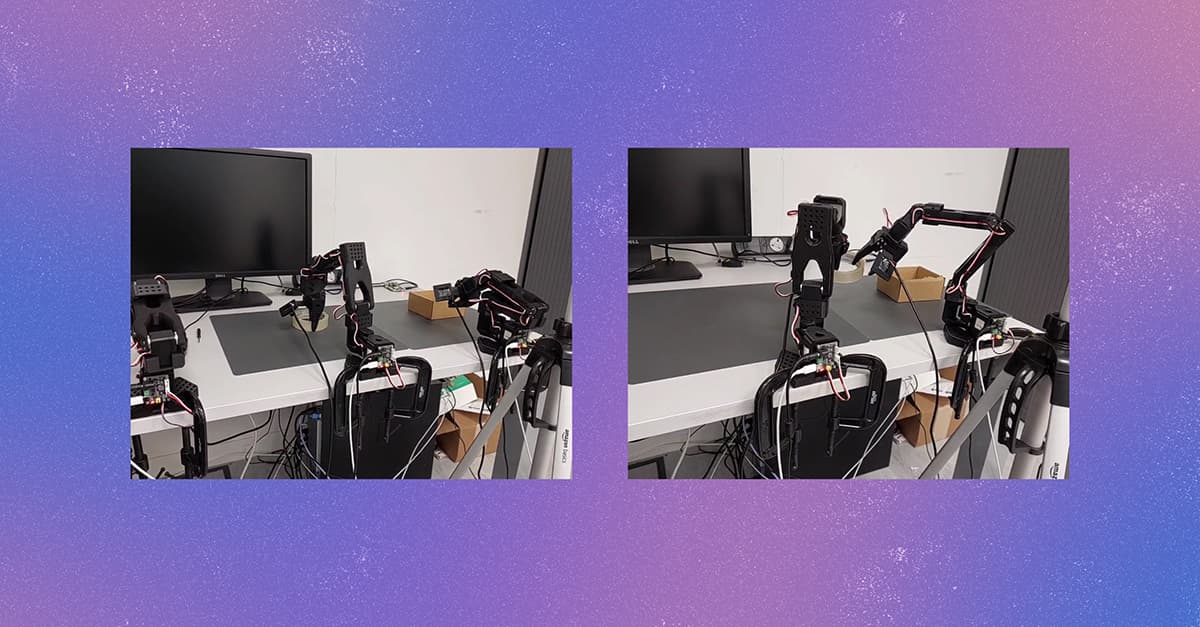
Traditional physical AI robots rely on power-hungry onboard GPUs, limiting model scale and battery life. Microsoft Research shows that offloading inference to edge or cloud GPUs resolves these bottlenecks. Offloading enables larger VLA models, speeds up mapping/planning by up to 383% compared to smaller onboard GPUs, and improves obstacle detection by 30%. By replacing heavy onboard GPUs with lightweight hardware like Raspberry Pi-5, battery life is significantly extended. This capability is now integrated into Microsoft's open-source Physical AI Toolchain using Kubernetes.
Key points
Overcoming Onboard Bottlenecks
Small onboard GPUs restrict physical AI model size. Insufficient hardware drops VLA model accuracy by 50%, whereas offloaded inference unlocks the power of massive models.
Extending Battery Lifetime
Onboard GPUs like Jetson Thor drain robot batteries by up to 160%. Replacing them with lightweight boards like Raspberry Pi-5 and offloading workloads saves hours of battery.
Boosting Speed and Accuracy
Compared to an A100, onboard computing slows planning by 383% and drops obstacle detection by 30%. Offloading ensures real-time, safe responses in dynamic spaces.
Cloud-Native Offloading Toolset
Microsoft introduced an offloading toolset in the Physical AI Toolchain, using Kubernetes to containerize and orchestrate workloads with ROS2 and LeRobot support.
How it works
| 機載推論 (Onboard) | 卸載推論 (Offloaded) | |
|---|---|---|
| On-Robot Hardware | 高功耗 GPU (如 Jetson Thor) | 輕量晶片 (如 Raspberry Pi-5) |
| Battery Impact | 嚴重消耗 (耗電增加達 160%) | 顯著延長 (省下數小時電量) |
| Model Scalability | 受限於機載 VRAM 與算力 | 無限制 (可調用強大雲端模型) |
| Planning & Navigation | 變慢達 383%,偵測延遲 | 即時處理,反應靈敏 |
Why it matters
This research challenges the default assumption that robots must carry heavy compute, paving the way for lower-cost, longer-lasting physical AI. By moving intensive inference to the cloud or edge, hardware developers can reduce robot weight and cost, while allowing seamless over-the-air upgrades to more powerful models, accelerating physical AI adoption in manufacturing and warehousing.
Who it affects
- AI Developer
- AI Researcher
- Enterprise Leader
- Product Manager
How to use it
- 1Mobile manipulation robots (e.g. Mobile Aloha) offloading dual-arm Rho model inference to an external Jetson Thor GPU.
- 2Warehouse robots using a Raspberry Pi-5 to offload heavy semantic mapping and path planning workloads to an on-premise edge server.
- 3Robotics developers leveraging Kubernetes to automatically containerize and deploy complex AI workloads across robots and cloud servers.
Limitations & caveats
- Highly dependent on network bandwidth and low latency, presenting risks of operational failure in areas with poor connectivity.
- Coordinating distributed inference across robot, edge, and cloud hardware increases system design and orchestration complexity.
Related
AD-WM: Action-Discriminative World Models for Counterfactual MPC
AD-WM:專為反事實預測控制設計的動作辨識世界模型
AD-WM enhances latent world models by learning to distinguish alternative actions from the same state, significantly improving counterfactual control and zero-shot transfer in robotics.
RAPID: Robot Agentic Programming from Demonstrations
RAPID:只需單次視覺示範,AI 代理即可自動生成與優化機器人操控程式
RAPID is a framework that automatically infers task specifications and environments from a single visual demonstration, using an agentic loop to program and refine generalized robot skills.
Rolling-WAM: Accelerating Robotic World Action Models via Rolling Imagination
Rolling-WAM:利用滾動想像實現高效控制的機器人世界動作模型
Rolling-WAM accelerates world action models by distributing the joint video-action denoising process across sliding windows over successive replanning cycles, achieving a 4.5x speedup.