Designing AI-Native Software: Lessons from NVIDIA TensorRT Model Connect
打造 AI 原生專案:NVIDIA TensorRT Model Connect 的開發啟示
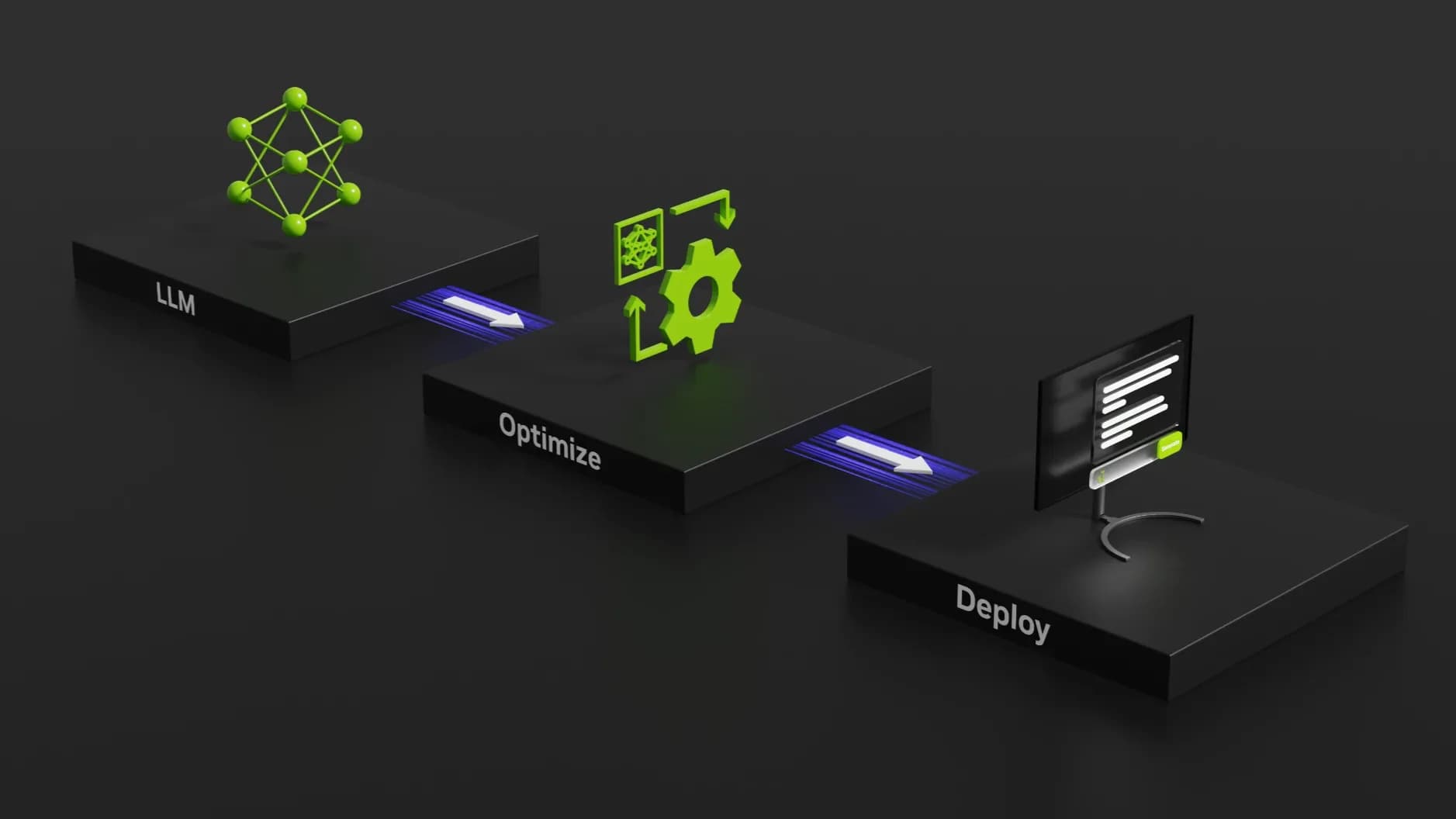
NVIDIA TensorRT Model Connect is an open-source C++ project designed to make high-performance inference accessible. Instead of using AI agents as mere helper tools, the team built an "AI-native" architecture from scratch. By breaking tasks horizontally, defining strict outcomes rather than rigid prompts, isolating model families, and implementing strict validation, they successfully scaled the project to support 128 model families tested on NVIDIA GB300 as of July 2026.
Key points
Scale Work Horizontally
Decompose workloads into independent model families and configurations, allowing parallel agents to work without blocking each other.
Define Outcomes, Not Steps
Provide agents with clear goals and objective acceptance criteria instead of prescribing step-by-step instructions.
Isolate Model Families
Keep model-specific knowledge localized to prevent cascading failures, accepting minor redundancy for system stability.
Automated GPU-Backed Validation
Code generation is cheap, but correctness is not. Use adversarial QA pipelines and human-legible evidence to maintain strict quality control.
How it works
Why it matters
This project provides a practical blueprint for building complex software alongside AI. The bottleneck of AI-native development is not how fast agents generate code, but whether the system architecture can safely absorb those changes. NVIDIA proves that with proper decoupling, reversibility, and rigorous automated validation, human engineers can transition to system designers and governors, unlocking unprecedented software scaling.
Who it affects
- AI Developer
- AI Researcher
- Product Manager
- Enterprise Leader
How to use it
- 1Convert Hugging Face or local checkpoints into optimized .bundle artifacts.
- 2Provide task-oriented native C++ APIs for multimodal workloads like text, vision, and audio.
Limitations & caveats
- Not all software engineering workloads can be easily decomposed into independent parallel units.
- Model-family isolation minimizes the blast radius but cannot prevent failures in shared infrastructure.
- Increasing parallel agents can scale up validation demands faster than accepted development throughput.
Related
Topology-Aware Workload Scheduling with NVIDIA Topograph
NVIDIA Topograph:實現拓撲感知排程,徹底釋放 AI 工廠 GPU 效能
NVIDIA Topograph is an open-source toolkit that automates cluster topology discovery and translates it for Kubernetes and Slurm schedulers to optimize GPU workload placement and eliminate network bottlenecks.
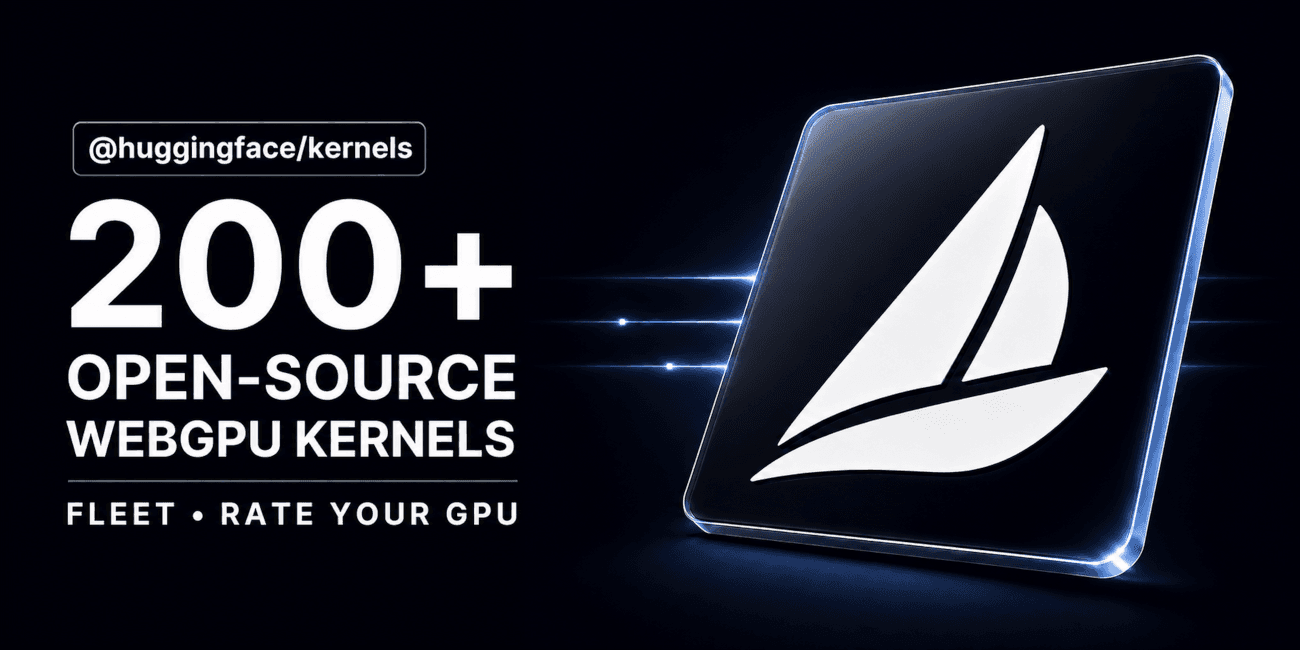
Hugging Face Launches @huggingface/kernels: Over 200 Optimized WebGPU Kernels for Local Web AI
Hugging Face 推出 @huggingface/kernels:為網頁端在地 AI 提供超過 200 個極速 WebGPU 核心
Hugging Face released @huggingface/kernels and Fleet, a browser benchmarking suite, offering 207 optimized WebGPU kernels that outperform ONNX Runtime Web by 2.57x on Apple M4 GPUs.