DISCO: Overlapping Community Detection via Diffusion-Induced Spatial Attention
DISCO:結合擴散引導空間注意力的重疊社群偵測深度學習框架
Traditional Graph Neural Networks (GNNs) rely on local message passing, which often smooths out community boundaries and limits long-range structural representations. To solve this, researchers developed DISCO. DISCO integrates structural priors from influence spreading dynamics, sparse multi-head attention, and non-negative community-affiliation learning. Utilizing a Bernoulli-Poisson edge-reconstruction objective, it infers overlapping communities from node attributes, structural profiles, or both, proving highly effective in tasks like cybersecurity temporal anomaly detection.
Key points
Overcoming Local Message Passing Limits
By introducing diffusion-induced spatial attention, DISCO captures long-range structural dependencies beyond immediate neighbors, avoiding GNN over-smoothing.
Flexible Dual-Feature Inference
Uses a Bernoulli-Poisson edge-reconstruction objective, enabling community inference from node attributes, structural profiles, or both.
Dynamic Anomaly Detection
Comparing community similarity between consecutive network snapshots provides an interpretable anomaly signal to locate deviating nodes.
How it works
Why it matters
In real-world networks, nodes typically participate in multiple groups simultaneously. DISCO solves the boundary-smoothing problem of GNNs in overlapping community detection. Its practical application in cybersecurity demonstrates its value for dynamic network monitoring, providing a highly interpretable and precise approach to identifying compromised devices and structural anomalies.
Who it affects
- AI Researcher
- AI Developer
- Enterprise Leader
How to use it
- 1Cybersecurity Anomaly Detection: Locating potential compromised devices by analyzing structural community deviations between communication network snapshots.
- 2Complex Community Mapping: Identifying overlapping members with multiple roles within organizational social networks or multifunctional biological networks.
Limitations & caveats
- Pre-computing influence spreading dynamics for structural priors may incur high computational and memory costs on extremely large networks.
- The anomaly detection framework currently relies on discrete snapshot comparisons, and its capability for real-time continuous streaming data requires further validation.
Related
PoEM: Predicting RL Outcomes Without Re-training Existing Policies
不需重新訓練!PoEM 演算法直接預測新獎勵函數的強化學習結果
The PoEM framework enables researchers to accurately predict and synthesize new RL policies without any actual RL training, by leveraging linear combinations of existing post-trained models in log-space.
NVIDIA Introduces NV-Reason-CT: Open 3D CT VLM with Radiologist Chain-of-Thought Reasoning
NVIDIA 推出首款開源 3D CT 醫療視覺語言模型 NV-Reason-CT,導入放射科醫師思考鏈推論
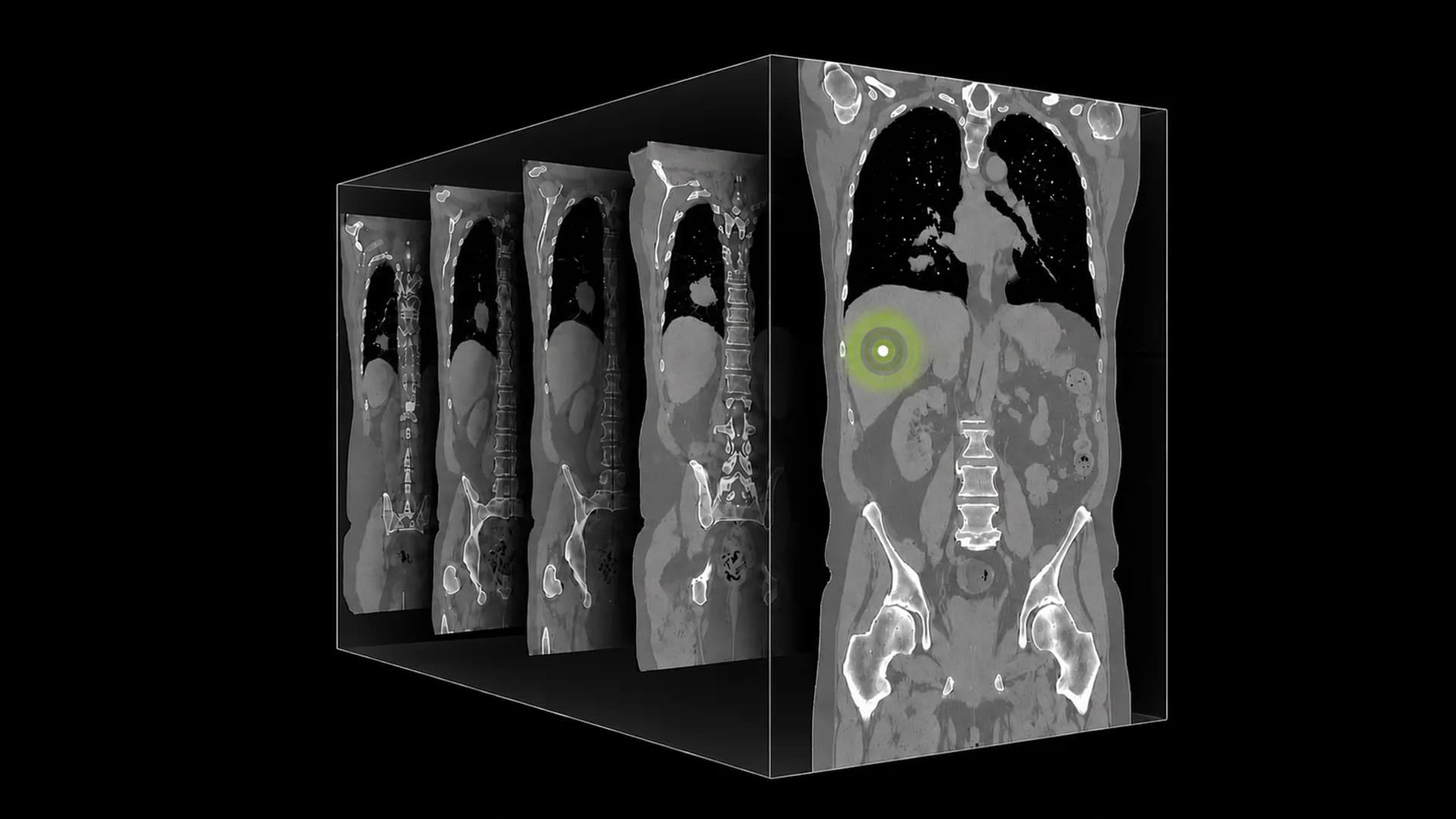
NVIDIA introduces NV-Reason-CT, an open 3D CT vision-language model that combines a native 3D ViT with a Qwen LLM to emulate radiologist chain-of-thought reasoning and generate structured reports.
Who Said What to Whom? SpeakerMem-R1 Introduces Dual-Track Memory for Multi-Party Dialogues
「誰對誰說了什麼?」SpeakerMem-R1 打造多方對話專屬的雙軌記憶機制
SpeakerMem-R1 tackles multi-party dialogue memory challenges using a speaker-labeled dual-track system and GRPO training to improve message attribution and social relation tracking.