PoEM: Predicting RL Outcomes Without Re-training Existing Policies
不需重新訓練!PoEM 演算法直接預測新獎勵函數的強化學習結果
RL post-training is computationally expensive and unstable. The PoEM framework solves this by predicting new RL policy outcomes without running any RL. The authors demonstrate that if a new reward is a linear combination of existing ones, the new log-policy is also a linear combination of the existing log-policies. Even in non-linear cases, they span a low-rank subspace. PoEM estimates weighting coefficients using only model outputs on samples, successfully synthesizing target policies across text and image tasks without any new training.
Key points
Zero Training Required
Synthesizes the target policy using existing post-trained models and a new reward function, bypassing expensive RL runs.
Log-Space Linearity
Shows that if a new reward is a linear combination of existing rewards, the target log-policy is also a linear combination of existing log-policies.
Low-Rank Generalization
Even for non-linear rewards, log-policies span an approximately low-rank subspace, making estimation highly generalizable.
Multi-Modal Validation
Demonstrated successfully across both text and image modalities with both synthetic and real-world reward functions.
How it works
Why it matters
Traditionally, any change or combination in alignment goals (e.g., safety, tone, facts) required running expensive RL post-training from scratch. PoEM introduces a 'zero-training' approach to policy synthesis, drastically reducing computational costs, carbon footprints, and deployment times for custom alignment.
Who it affects
- AI Developer
- AI Researcher
- Enterprise Leader
How to use it
- 1Combining multiple safety and style alignment rewards without re-training
- 2Rapid prototyping of specialized multimodal policies for newly defined reward functions
Limitations & caveats
- Requires a set of already post-trained 'basis' models that span the relevant capability space
- Theoretical linear mapping assumes standard RL formulations; complex non-linear reward combinations may yield approximation errors
Related
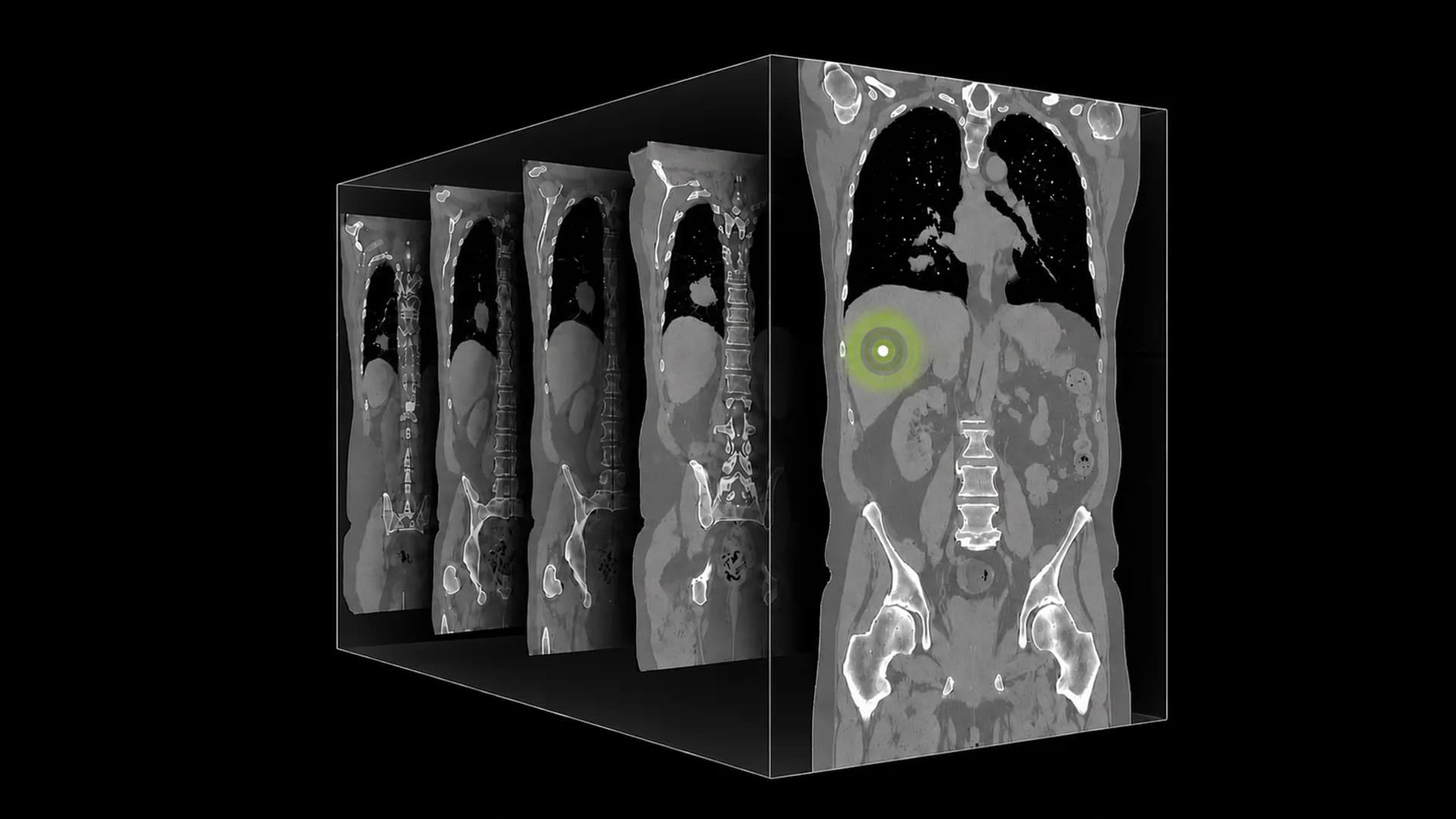
NVIDIA Introduces NV-Reason-CT: Open 3D CT VLM with Radiologist Chain-of-Thought Reasoning
NVIDIA 推出首款開源 3D CT 醫療視覺語言模型 NV-Reason-CT,導入放射科醫師思考鏈推論
NVIDIA introduces NV-Reason-CT, an open 3D CT vision-language model that combines a native 3D ViT with a Qwen LLM to emulate radiologist chain-of-thought reasoning and generate structured reports.
Who Said What to Whom? SpeakerMem-R1 Introduces Dual-Track Memory for Multi-Party Dialogues
「誰對誰說了什麼?」SpeakerMem-R1 打造多方對話專屬的雙軌記憶機制
SpeakerMem-R1 tackles multi-party dialogue memory challenges using a speaker-labeled dual-track system and GRPO training to improve message attribution and social relation tracking.
FleXray: Universal Generalist Model for Full-Body X-Ray Segmentation
FleXray:首款通用型全身體檢 X 光影像分割模型
FleXray is a generalist model that segments 60 anatomical structures across clinical X-rays, trained using a physics-based generative engine that simulates fully-annotated 2D X-rays from 3D CT datasets.