EngramEdit: Decoupled Knowledge Updates in LLMs through Conditional Memory
EngramEdit:透過條件記憶體實現大型語言模型的解耦知識編輯
Traditional LLM editing often struggles with parametric side-effects. EngramEdit introduces a decoupled update method for conditional memory architectures (like DeepSeek Engram). It first identifies target memory representations for updated facts, then jointly updates shared n-gram embeddings. Crucially, it heavily penalizes updates to highly reused embeddings to prevent side-effects. Experiments show near-perfect edit success, a 3x accuracy improvement in CoT multi-hop reasoning over baselines, and excellent preservation of unrelated knowledge.
Key points
Decoupled Editing
Updates facts by modifying conditional memory n-gram embeddings, leaving the core Transformer backbone completely untouched.
Target Optimization
Computes optimal target representations across multiple expressions of a fact before jointly updating the shared embeddings.
Side-Effect Control
Penalizes updates to highly reused embeddings to safeguard unrelated knowledge and prevent degradation of general capabilities.
Multi-Hop Reasoning
Edited knowledge generalizes to unseen expressions, achieving nearly 3x the accuracy of the strongest baseline in CoT reasoning.
How it works
Why it matters
As LLMs demand real-time and domain-specific factual updates, traditional fine-tuning or RAG present high costs or hallucination risks. EngramEdit proves that conditional memory can serve as an 'editable knowledge interface' rather than just a scaling tool. By decoupling factual storage from general-purpose computation, it paves the way for lifelong learning LLMs that can be updated efficiently with zero side-effects.
Who it affects
- AI Developer
- AI Researcher
- Product Manager
How to use it
- 1Real-time factual updates for LLMs with conditional memory architectures.
- 2Mitigating factual hallucinations by directly correcting stale embeddings in LLMs.
Limitations & caveats
- Requires the model to use conditional memory architectures (like DeepSeek Engram), and is not directly applicable to vanilla Transformers.
- Scalability and computational overhead when updating massive batches of facts simultaneously need further validation.
Related

Falcon-Emirati-7B: Bridging the Gap in Emirati Arabic Dialect and Culture
解鎖阿聯酋方言與文化:專為在地語境打造的 Falcon-Emirati-7B 模型
Falcon-Emirati-7B is a 7B parameter model specialized in Emirati Arabic, capturing local dialect, Nabati poetry, and cultural nuances where generic models fail.
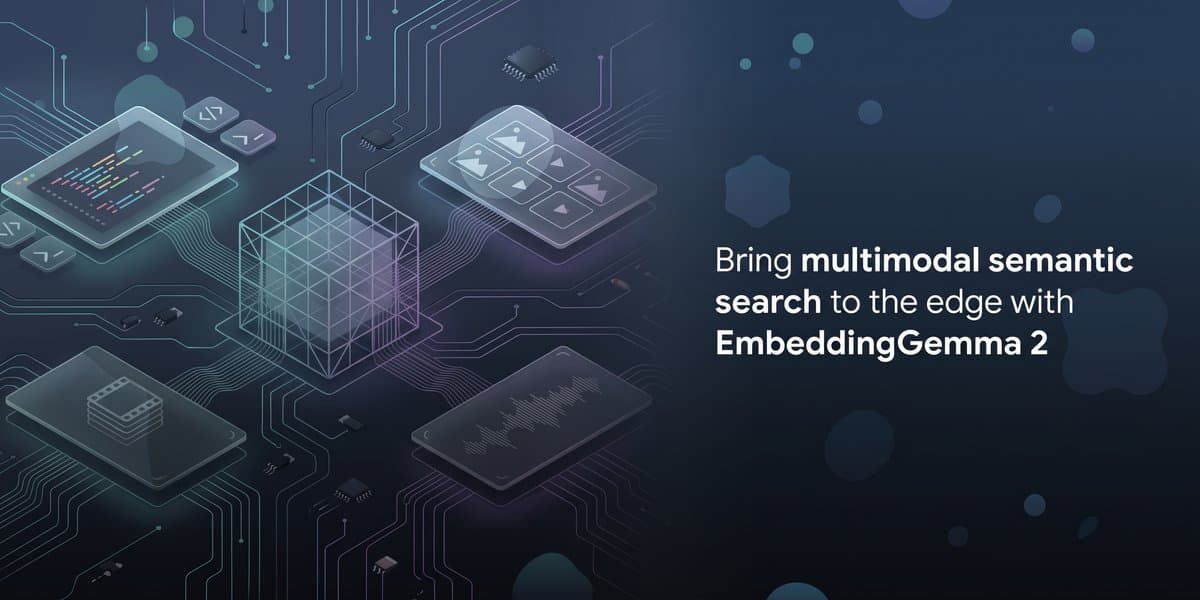
Google Launches EmbeddingGemma 2: Compact 740M Parameter Multimodal Embedding Model for Ultra-Low Latency Edge AI
Google 推出 EmbeddingGemma 2:超輕量 740M 參數,讓裝置端擁有強大「多模態語意搜尋」與即時決策力
Google's EmbeddingGemma 2 is a 740M open-weight multimodal embedding model that runs entirely on-device, unifying text, image, video, and audio into a single vector space with minimal memory footprint.
Base Models Can Reason: Unlocking Latent Performance with Strategic Starting Tokens
基礎模型也能推理:啟動關鍵「開頭 token」釋放隱藏實力
A new study reveals that forcing base models to start with specific token cues like 'Okay' triggers reasoning behavior comparable to RL-tuned models, tracing this effect directly to pre-training data structures.