Unifying GPU-Initiated Networking: How NVIDIA DOCA GPUNetIO Removes the CPU Bottleneck
GPU 主導網路的終極整合:NVIDIA DOCA GPUNetIO 如何解放運算效能
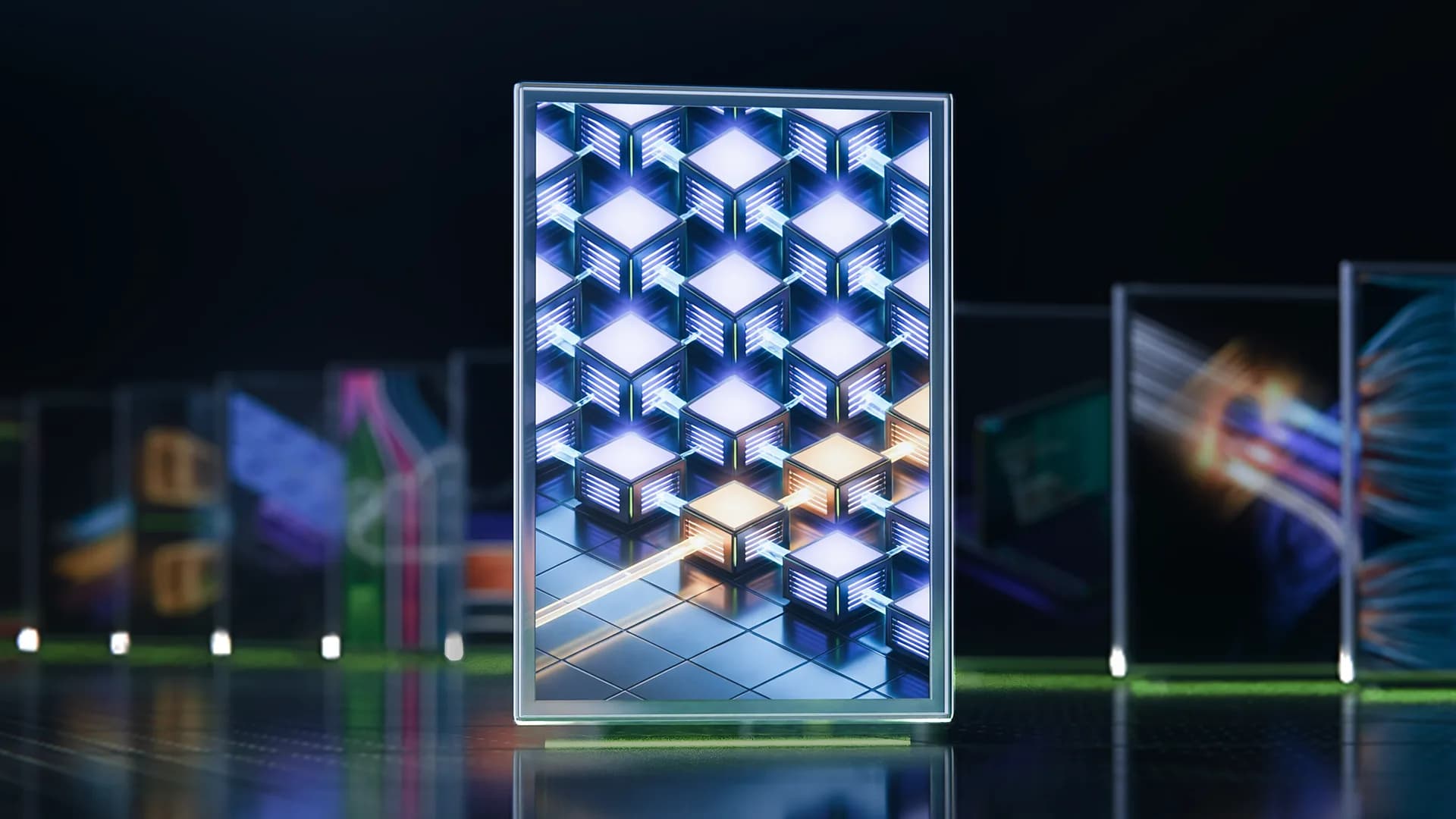
In distributed computing, CPU-mediated network transactions create bottlenecks. NVIDIA has consolidated its GPU-initiated networking (GDA-KI) across stacks like NCCL and NVSHMEM into DOCA GPUNetIO. Shipped as both a lightweight open-source library and a full DOCA SDK, it offers high- and low-level APIs and diverse doorbell mechanisms. This unified plumbing eliminates CPU bottlenecks, scales throughput for small messages, and achieves ultra-low latencies down to 2.6 microseconds in NVQLink tests.
Key points
Eliminating CPU Bottlenecks
Allows CUDA kernels to directly drive Ethernet, RDMA, and DMA operations, separating control and data paths to bypass CPU-induced latency.
Unified GDA-KI Architecture
Consolidates fragmented GDA-KI implementations across communication libraries (NCCL, NVSHMEM, UCX) into a single, shared, and optimized foundation.
Dual Open-Source & SDK Strategy
Offers a lightweight open-source version (RDMA-Verbs) and a full DOCA SDK, with the open-source library dynamically loading advanced SDK features at runtime.
Flexible Doorbell Mechanisms
Supports Regular (MMIO-mapped), BlueFlame (ultra-low latency), and CPU-assisted modes to notify the NIC of pending tasks depending on topology.
How it works
Why it matters
As distributed AI training and real-time workflows (such as quantum computing and 5G) scale, network communication has become the primary bottleneck. By delivering a unified, open-source, and efficient GPU-initiated networking standard, GPUNetIO eliminates engineering fragmentation across communication stacks. It allows libraries to focus on collective algorithms while fully unlocking hardware capabilities, leading to low latency and high bandwidth even in highly scaled, small-message workloads.
Who it affects
- AI Developer
- AI Researcher
- Enterprise Leader
How to use it
- 1Distributed AI Training: Leverage GPU-initiated RDMA directly in NCCL (GIN) to optimize collective communication algorithms.
- 2High-Scaling Multi-GPU Workloads: Enable GPUNetIO transport in NVSHMEM to eliminate CPU proxy bottlenecks for small message sizes.
- 3Ultra-Low Latency Real-Time Control: Achieve ~2.6 µs forwarding latency in quantum-classical co-processing workflows like NVQLink.
Limitations & caveats
- The open-source version is restricted to a Verbs-oriented subset; fuller features like Ethernet, DMA, and broader RDMA require the full DOCA SDK.
- In systems lacking direct GPU-to-NIC connectivity (such as DGX Spark), developers must fall back to the slower CPU-assisted doorbell mode.
Related
NVIDIA Expands AI Storage Acceleration with cuObject and SCADA Server SDK
NVIDIA 推出 cuObject 與 SCADA 伺服器 SDK:實現免經 CPU 的 GPU 直連快取與物件儲存加速
NVIDIA announced the general availability of cuObject libraries and the new SCADA Server SDK, enabling GPU-initiated, zero-copy storage access over RDMA to bypass the CPU and accelerate AI workloads.
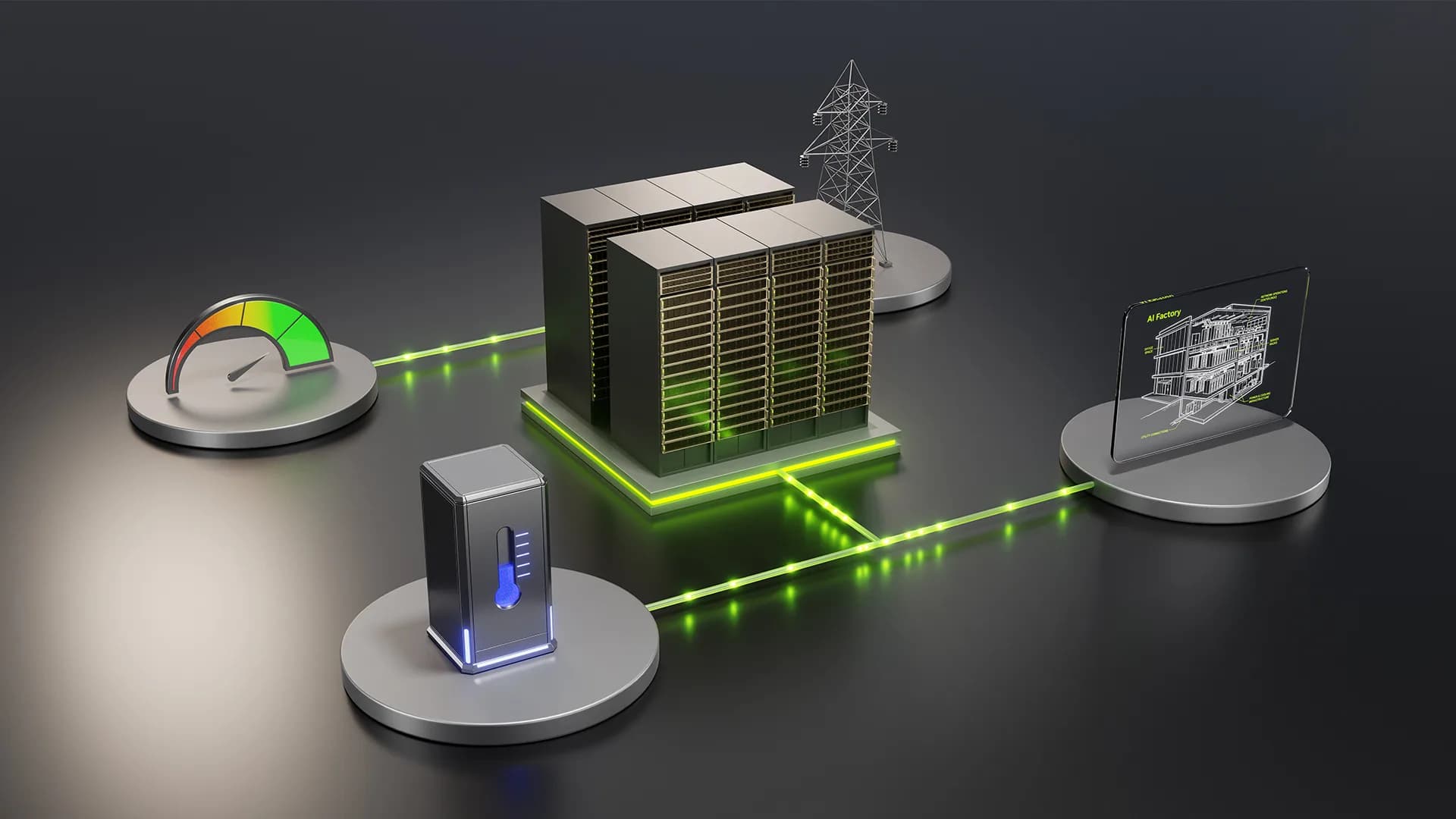
Unlocking Stranded Capacity: How NVIDIA DSX MaxLPS Boosts AI Factory Throughput by 49%
破解電力瓶頸:NVIDIA DSX MaxLPS 如何釋放 AI 工廠高達 40% 的隱形算力
A joint NVIDIA and Nscale evaluation demonstrates that DSX MaxLPS dynamically allocates power to deploy 37% more GPUs and boost LLM throughput by 49% within the same power budget.
NVIDIA Launches Open-Source NVCRE: Automating GPU Cluster Readiness Validation Before AI Workloads Run
NVIDIA 開源 NVCRE:在 AI 工作負載上線前,自動驗證 GPU 叢集準備狀態
Traditional GPU health checks often miss performance bottlenecks in distributed training. NVIDIA's open-source NVCRE is a Kubernetes controller that runs active, topology-aware workloads to pinpoint failing nodes before production starts.