RoboJEPA: Scaling Robotic Latent World Models
RoboJEPA:具身智慧的潛在世界模型與規模化法則
RoboJEPA is an 8B-parameter robotic world model trained on real-world data across 12 different robot embodiments. By applying the Joint Embedding Predictive Architecture (JEPA), the researchers established that the model's 'imagination error' follows a second-order power law relative to compute. This error acts as a reliable proxy for physical deployment performance, enabling predictable downstream planning and successful zero-shot long-horizon execution on real hardware.
Key points
Scaling Law Verified
The model's imagination error follows a second-order power law in relation to compute, predicting model quality beyond the training scale.
Multi-Embodiment Training
RoboJEPA is trained on a massive, real-world dataset spanning 12 different robotic embodiments to ensure physical generalization.
Largest JEPA Predictor
With 8 billion parameters, RoboJEPA is the largest Joint Embedding Predictive Architecture (JEPA) predictor model trained to date.
Zero-Shot Deployment
Supports zero-shot deployment, enabling physical robots to plan and solve long-horizon tasks from a single goal image.
How it works
Why it matters
Traditionally, robotic world models lacked principled scaling laws, making it hard to justify massive compute investments. RoboJEPA proves that 'imagination error' in latent spaces serves as a robust proxy for real-world execution. This provides a rigorous scaling blueprint for embodied AI, reducing the need for costly physical trials and accelerating the development of highly capable robotic agents.
Who it affects
- AI Researcher
- AI Developer
- Enterprise Leader
How to use it
- 1Goal-conditioned physical planning: Providing a target image of a finished task to guide a robot through multi-step manipulation.
- 2Cross-platform robotic control: Controlling different robotic manipulators and arms using a unified pre-trained world model.
Limitations & caveats
- Training and fine-tuning require massive, multi-embodiment real-world data and substantial compute, creating high entry barriers.
- In completely unseen and highly dynamic environments, zero-shot predictions may still encounter unexpected failures.
Related
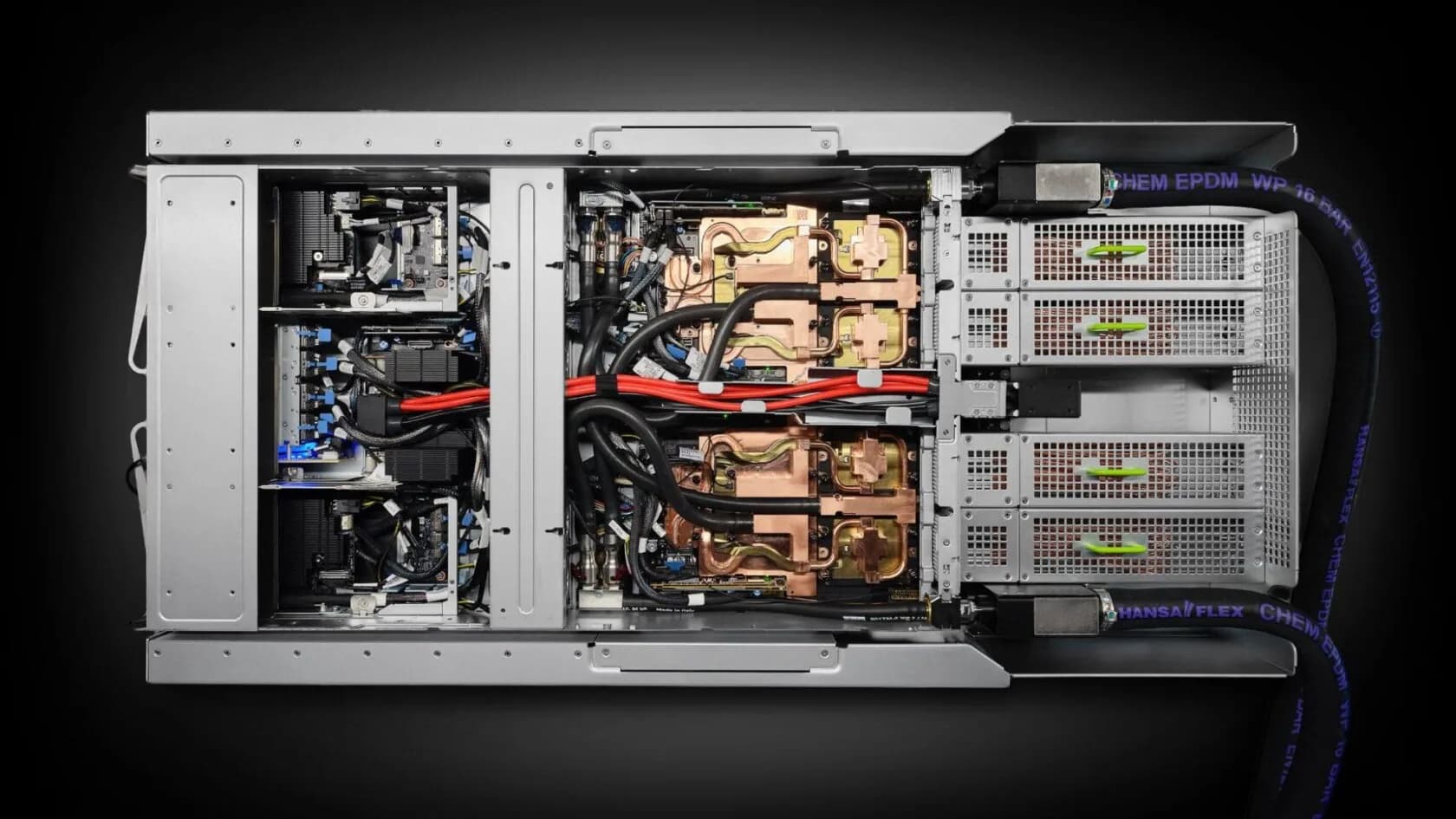
The Machines That Make the Machines: How NVIDIA Automates GB300 Tester Tray Assembly
機器造機器:NVIDIA 如何用 AI 與實體控制自動組裝 GB300 測試托盤
NVIDIA Seattle Robotics Lab shares insights from automating GB300 superchip tester tray assembly, highlighting the synergy between classical control engineering, smart mechanical design, and RL.
Long-WAM: Scaling Context for Real-Time World-Action Models
Long-WAM:突破即時控制延遲,擴展機器人世界動作模型的長上下文
Long-WAM scales the visual history context of world-action models under real-time constraints, demonstrating that autoregressive pretraining is key to unlocking the power of long video memories.
"Rephrase Before You Act": Mitigating the Extreme Language Sensitivity of Vision-Language-Action Models
機器人控制的「文字敏感症」:為何一個詞能讓 VLA 模型成功率從 100% 跌到 2%?
This study exposes the extreme sensitivity of Vision-Language-Action (VLA) models to instruction phrasing and introduces a zero-shot framework that uses LLMs to distill rewriting rules, significantly boosting robotic task success without retraining.