Overcoming Incomplete Data in MSA: SemMSA Harnesses LLM Latent Semantics and Spectral Alignment
突破多模態情緒分析瓶頸:SemMSA 藉由 LLM 潛在語意與無錨點頻譜對齊解決資料缺失問題
Multimodal Sentiment Analysis (MSA) often suffers from incomplete raw inputs, where conventional imputation methods suffer from spurious generation. SemMSA resolves this through Cross-modal Semantic Refinement (CSR) and Cross-modal Spectral Alignment (CSA). CSR adaptively projects visual and acoustic representations into a frozen LLM space to extract continuous latent semantics without explicit decoding. CSA then captures global nonlinear dependencies by enhancing the dominant spectral component of their kernel Gram matrix, bypassing predefined anchor modalities. SemMSA achieves state-of-the-art results on SIMS, MOSI, and MOSEI benchmarks.
Key points
Latent Semantic Refinement
The CSR module maps visual and acoustic features into a frozen LLM embedding space, iteratively refining continuous semantic states without expensive explicit decoding.
Anchor-Free Spectral Alignment
CSA aligns all representations globally by enhancing the dominant spectral component of their kernel Gram matrix, avoiding reliance on a pre-defined anchor modality.
Anti-Collapse Spectral Separation
An instance-level spectral separation constraint is integrated to maintain cross-sample discriminability and prevent representation collapse.
How it works
Why it matters
In real-world settings, multimodal signals like audio or video are frequently missing. SemMSA demonstrates that instead of hallucinating raw features, systems can leverage frozen LLMs as high-level semantic anchors for robust feature alignment. This provides a lightweight and noise-resistant architecture for multimodal AI agents to understand human emotions under partial sensory inputs.
Who it affects
- AI Researcher
- AI Developer
- Product Manager
How to use it
- 1Multimodal sentiment analysis in wild environments where video or audio tracks are partially corrupted or missing.
- 2Integration into empathetic conversational agents to sustain reliable human-robot interaction under incomplete sensor inputs.
Limitations & caveats
- The performance relies on the frozen LLM embedding space, which might be limited by the pre-trained LLM's own semantic capacity.
- Under extreme scenarios where almost all primary modalities are missing, the limits of the semantic refinement require further validation.
Related
PoEM: Predicting RL Outcomes Without Re-training Existing Policies
不需重新訓練!PoEM 演算法直接預測新獎勵函數的強化學習結果
The PoEM framework enables researchers to accurately predict and synthesize new RL policies without any actual RL training, by leveraging linear combinations of existing post-trained models in log-space.
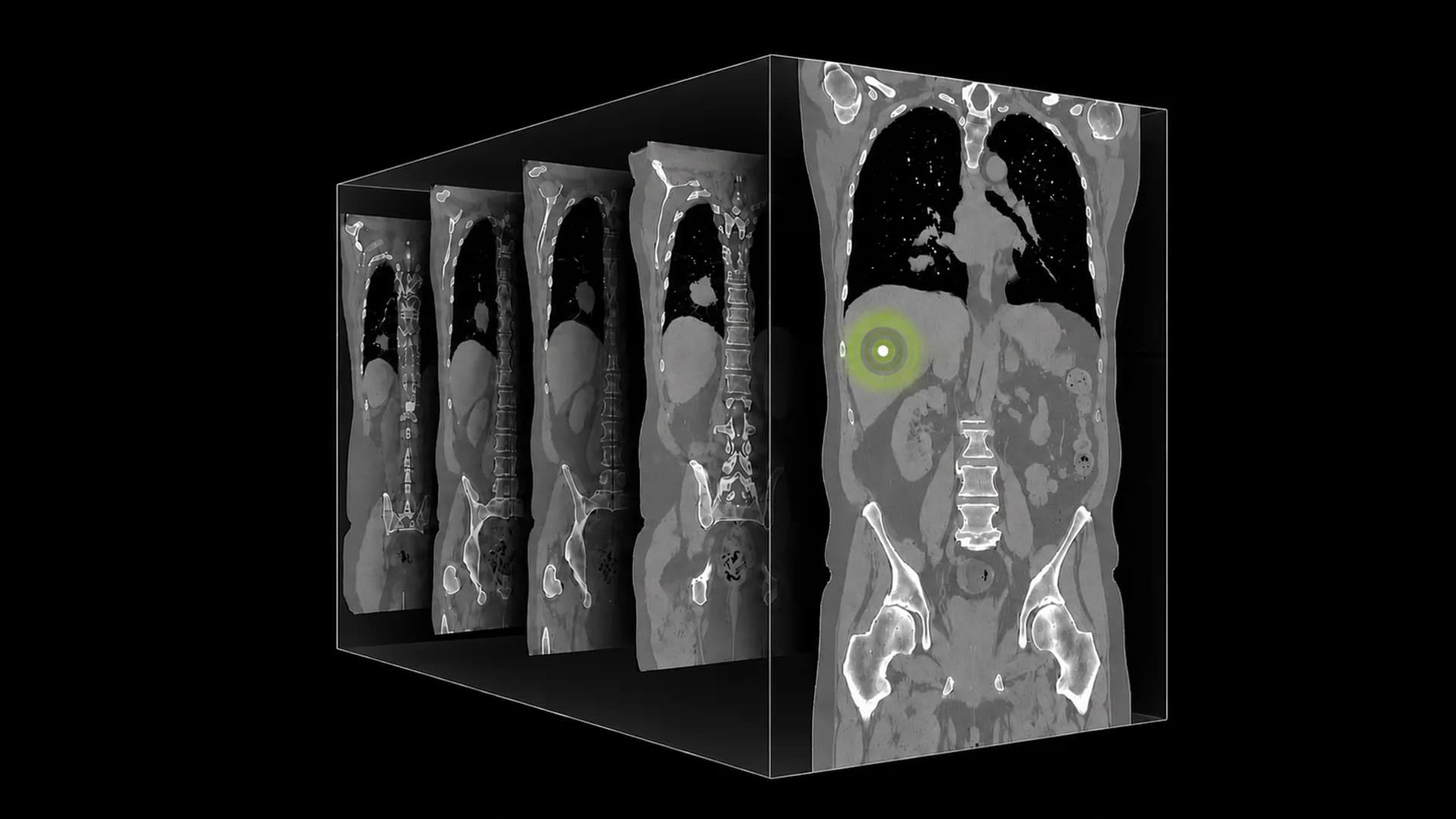
NVIDIA Introduces NV-Reason-CT: Open 3D CT VLM with Radiologist Chain-of-Thought Reasoning
NVIDIA 推出首款開源 3D CT 醫療視覺語言模型 NV-Reason-CT,導入放射科醫師思考鏈推論
NVIDIA introduces NV-Reason-CT, an open 3D CT vision-language model that combines a native 3D ViT with a Qwen LLM to emulate radiologist chain-of-thought reasoning and generate structured reports.
Who Said What to Whom? SpeakerMem-R1 Introduces Dual-Track Memory for Multi-Party Dialogues
「誰對誰說了什麼?」SpeakerMem-R1 打造多方對話專屬的雙軌記憶機制
SpeakerMem-R1 tackles multi-party dialogue memory challenges using a speaker-labeled dual-track system and GRPO training to improve message attribution and social relation tracking.