AI Daily ·
Ai2 Open-Sources AstaBrief, Looped-DiT Boosts Efficiency, and DynaHarness Empowers Robots
今日 AI 重點
Today's AI highlights feature three major developments: Allen Institute for AI open-sourced AstaBrief 8B, a specialized scientific report generator delivering high speed and citation accuracy. Meanwhile, Looped-DiT dramatically scales image generation efficiency by reusing shared Transformer blocks, and DynaHarness introduces a dynamic physical framework to help self-evolving robot agents translate failures into capability updates. Other notable updates include TPU optimizations for video diffusion, ProvenanceGuard for agent source verification, and Microsoft's space weather forecasting pipeline.
- 01arXivRobotics
DynaHarness: A Dynamic Physical Harness for Self-Evolving Robot Agents
DynaHarness resolves the timescale mismatch between robotic semantic reasoning and physical execution. It utilizes a dual-brain system linked by a physical execution contract that bounds commands and records data. When failure occurs, DynaHarness attributes the fault to specific skills, enabling targeted revisions and regression checks for self-evolution. Evaluated on the LIBERO-Pro benchmark, DynaHarness achieved a 75.2% success rate, a massive leap from the frozen policy's 17.5%.
- 02arXivImage AI
Looped-DiT: Scaling Image Generation Efficiency via Recurrent Transformer Blocks
Traditional scaling for text-to-image models relies on expanding parameters or increasing denoising steps. Looped-DiT proposes a different approach: repeatedly running shared Transformer blocks within each denoising step to increase computational depth without adding parameters. To prevent the feature erosion and weak supervision of naive looping, it integrates deep supervision and self-modulating attention. This allows a 260M-parameter model to outperform a 6.5x larger model on multiple benchmarks while requiring 4.9x lower inference compute.
 03Hugging FaceAI Research
Ai2 Open-Sources AstaBrief: An 8B Scientific Report Generator 3.5x Faster than Claude
AstaBrief 8B is an open-weights model based on Qwen3-8B, designed to generate cited scientific reports quickly and cost-effectively. Bypassing complex RL, Ai2 used a streamlined SFT and DPO pipeline paired with strict data filtering focusing on citation density. By generating the full report in a single pass instead of section-by-section, AstaBrief cuts report generation time to 51.1 seconds on average—3.5x faster than Asta's Claude-powered Thinking mode—while enabling local deployment for sensitive data.
 04Google AI DevelopersVideo AI
Accelerating Video Diffusion on TPUs: Optimizing Spatio-Temporal Sparse Attention
High-resolution video diffusion suffers from quadratic attention scaling, where self-attention consumes up to 88.2% of per-layer latency at 1440p. Google researchers exploited the structured sparsity of Spatial-Temporal attention (SVG). By building optimized Pallas kernels on TPU v6e, they bypassed TPU hardware bottlenecks via tile-aligned boundaries and localized token permutation. This successfully achieved up to a 1.69x end-to-end speedup for 2K video generation, saving over 16 minutes per video.
 05Hugging FaceAI Agent
Stopping Cross-Source Conflation: ProvenanceGuard Brings Source-Aware Verification to MCP Agents
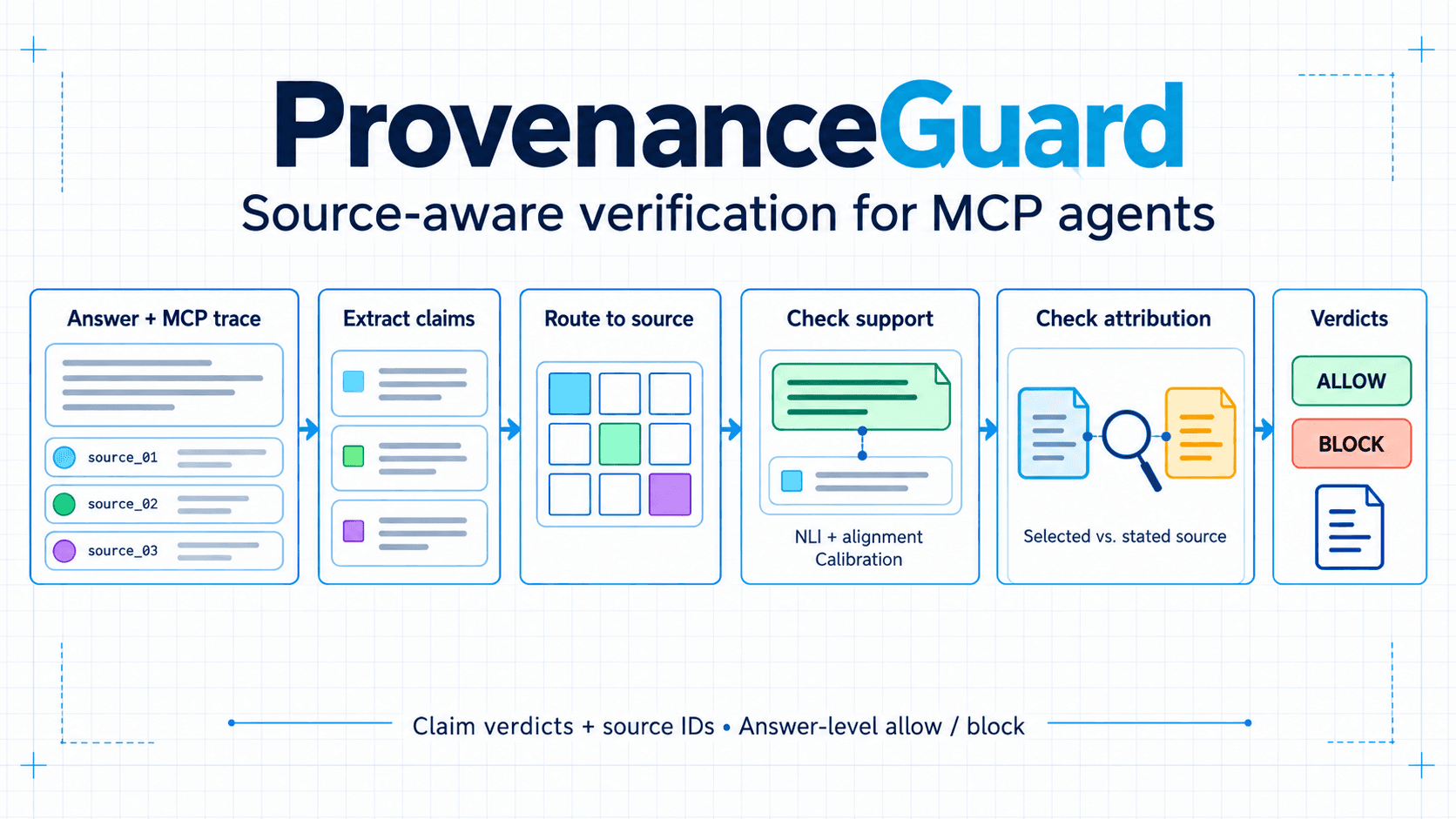
When LLM agents retrieve data from multiple tools, they often suffer from "cross-source conflation"—stating a true fact but attributing it to the wrong source. Traditional verifiers ignore sources if the fact exists in the pooled context. ProvenanceGuard solves this by intercepting the agent's MCP trace post-generation without retraining. It preserves source IDs, decomposes answers into claims, routes them to specific sources, verifies support using NLI, and checks attribution. In medical-domain tests, it caught 138 of 139 invalid claims, achieving a 0.802 block F1 score and outperforming source-blind baselines.
 06NVIDIA DeveloperAI Agent
Tracing AI Agent Trajectories and Performance with NVIDIA NeMo Relay
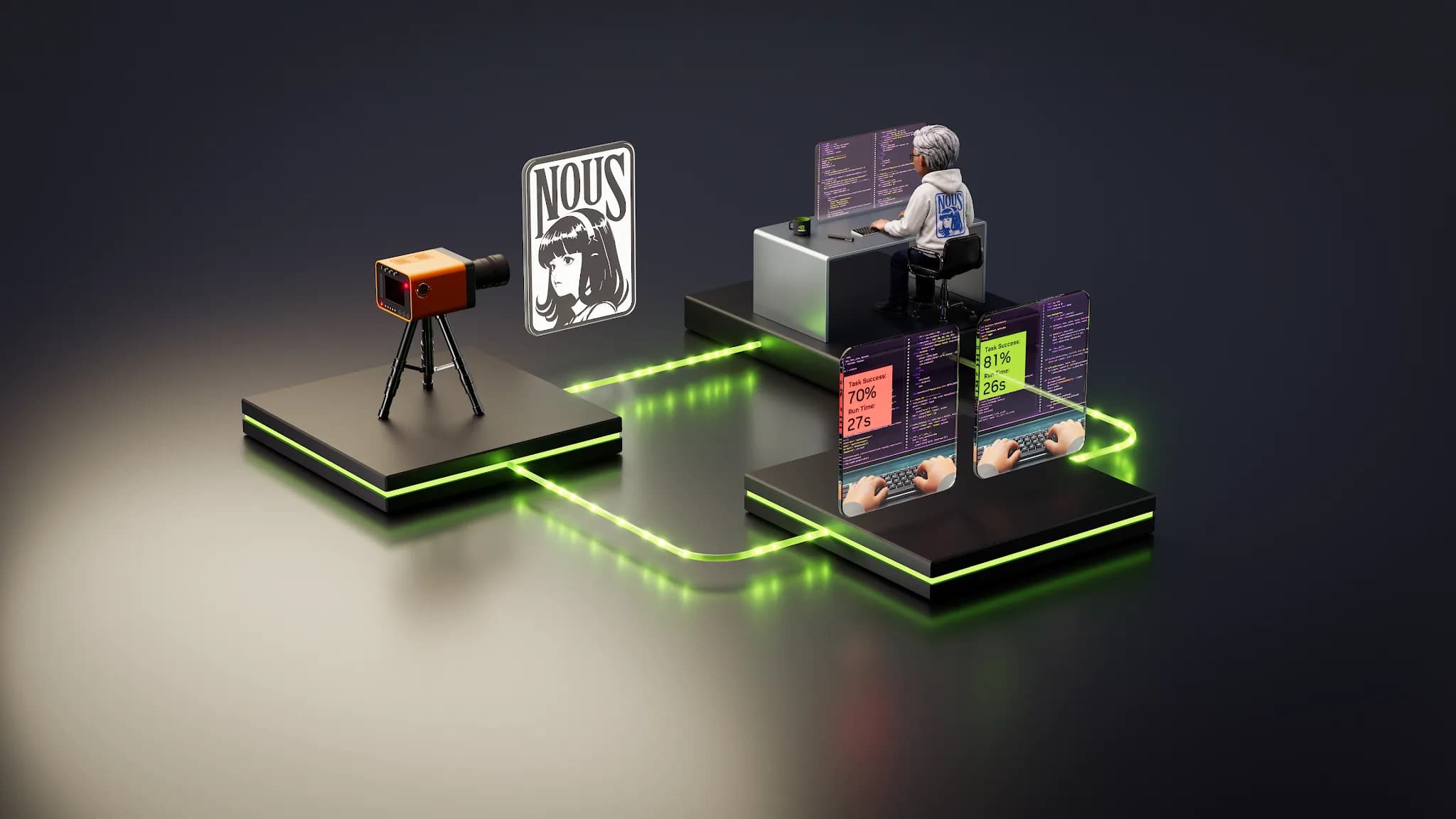
Standard evaluations only check if an AI agent succeeded, ignoring inefficient hidden steps like redundant tool calls and high token usage. NVIDIA NeMo Relay addresses this by introducing structured observability for agent harnesses like Hermes Agent. It outputs event-level logs (ATOF) and step-by-step trajectories (ATIF), and exports OpenTelemetry traces to platforms like Arize Phoenix. This allows developers to analyze exact LLM calls, tool errors, and duration, transforming agent evaluation from simple success checks into deterministic performance optimization.
 07Microsoft ResearchAI Research
AI for Space Weather: Forecasting Geomagnetic Risks on Power Grids 30–60 Minutes in Advance
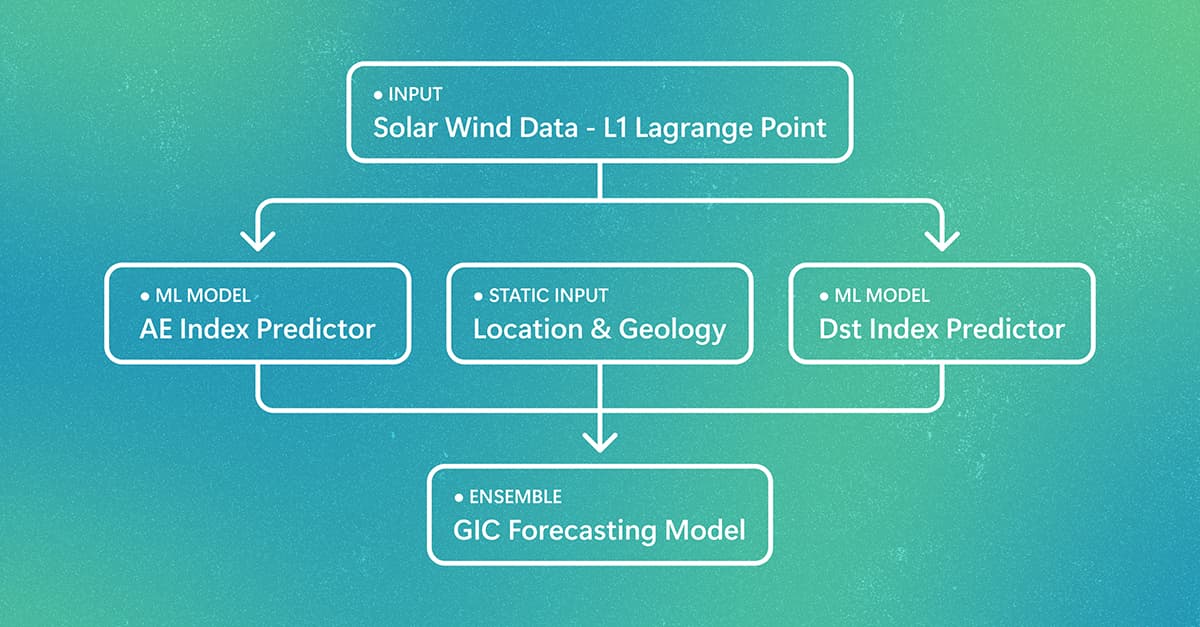
Microsoft Research developed an ML pipeline that utilizes solar-wind data from the L1 Lagrange point to forecast geomagnetic indices (AE and Dst). Combined with substation-specific geology and latitude data, a gradient-boosting model predicts the magnetic-field change rate (dB/dt). The system detected nearly 80% of major space-weather events and completed inference for 66,935 US substations in 333 milliseconds, providing grid operators with a critical 30-to-60-minute early warning.
 08Hugging FaceAudio AI
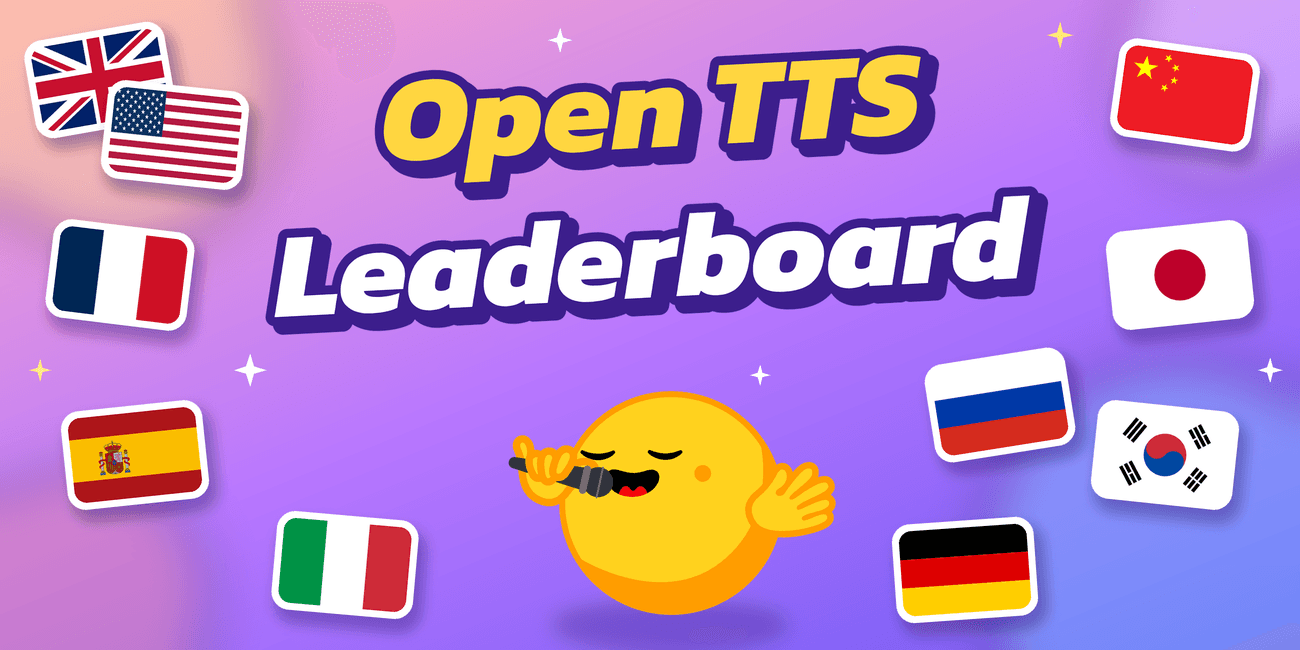
Hugging Face Launches Open TTS Leaderboard for Multilingual TTS and Voice Cloning
With over 8,000 TTS models on Hugging Face, human-voting arenas are too slow and costly to scale, often leaving open-weights models underrepresented. The new Open TTS Leaderboard solves this by using objective, automated metrics—such as ASR-based WER/CER for intelligibility, SIM for speaker similarity, and TTFA for streaming latency—to evaluate models in hours instead of weeks. It highlights multilingual support, voice cloning, and streaming capabilities, bridging the gap with an interactive 'Listen' tab for direct output comparisons.