AI Daily ·
NVIDIA Introduces Medical AI Models and New Insights on LLM Vulnerability Repair
今日 AI 重點
Today's AI highlights focus on medical imaging and model evaluation breakthroughs. NVIDIA introduced NV-Reason-CT, an open 3D CT vision-language model featuring radiologist chain-of-thought reasoning to generate structured reports. Additionally, researchers unveiled FleXray, a generalist model capable of segmenting 60 anatomical structures on X-rays, and identified critical flaws in current LLM vulnerability repair metrics, proposing the more reliable diff_F1 alternative to advance both medical AI and code security.
 01NVIDIA DeveloperAI Research
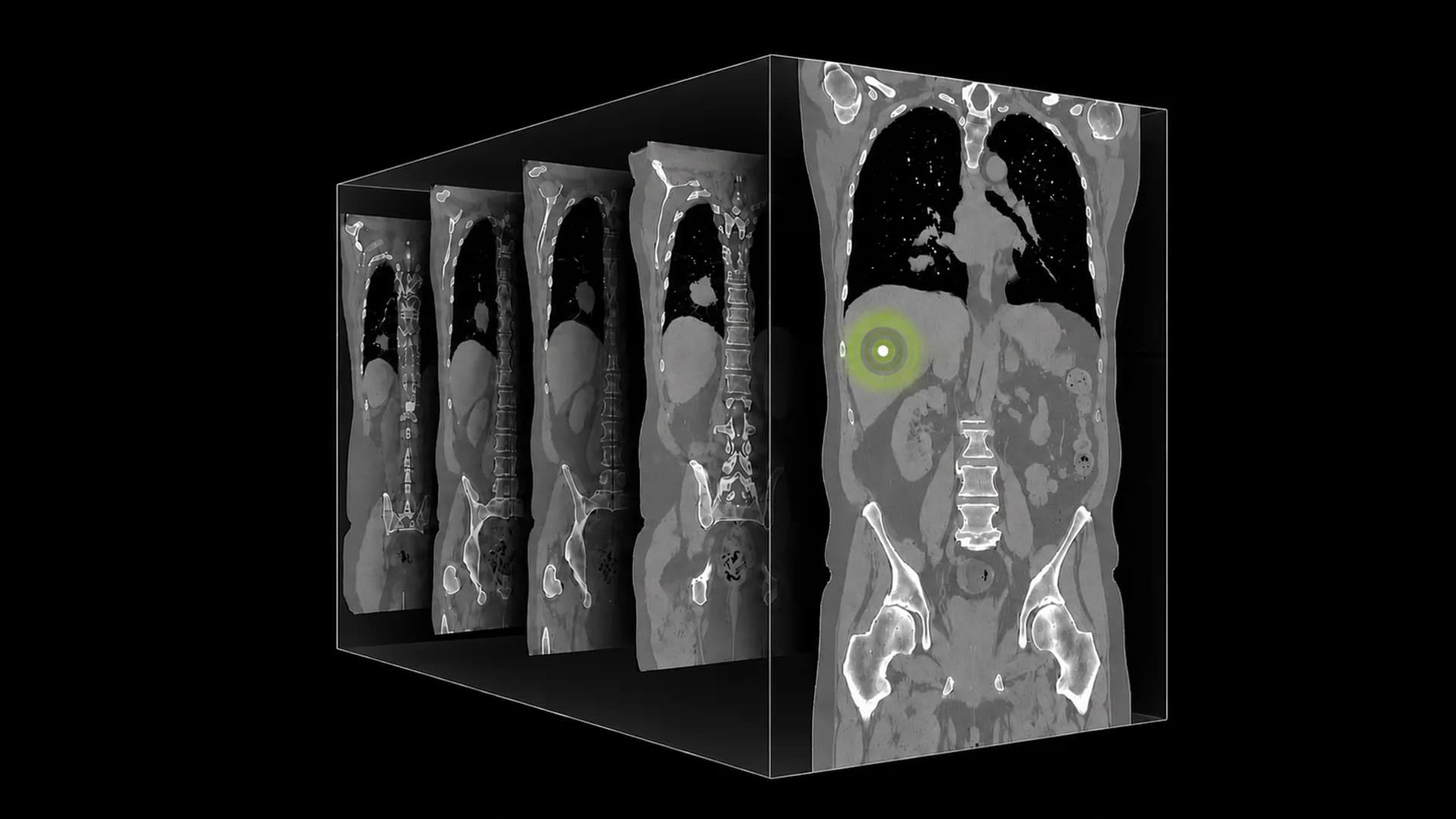
NVIDIA Introduces NV-Reason-CT: Open 3D CT VLM with Radiologist Chain-of-Thought Reasoning
NV-Reason-CT is an open 3D CT vision-language model designed to overcome the limitations of 2D slice-based analysis. By combining a native 3D Vision Transformer (ViT) and 3D MRoPE with a Qwen3.5-4B LLM, it processes entire 3D volumes holistically. Trained via a two-stage pipeline consisting of supervised fine-tuning and GRPO reinforcement learning, the model emulates radiologist reasoning, generates structured reports covering chest and abdominal findings, and supports interactive multi-turn clinical dialogue.
- 02arXivAI Research
FleXray: Universal Generalist Model for Full-Body X-Ray Segmentation
X-rays are widely used but hard to quantify because 3D anatomical structures overlap on a 2D projection, making manual labeling impractical. To solve this, researchers developed FleXray, a generalist model trained via a physics-based generative data engine. By projecting existing 3D whole-body CT datasets into annotated 2D X-rays and styling them with generative models, FleXray learns to segment 60 anatomical structures across unseen clinical X-rays, enabling automated disease grading and surgical navigation.
- 03arXivAI Coding
The Illusion of Compile Rate: Why Common Metrics Fail LLM-Based Vulnerability Repair
This study evaluates LLMs on automated C/C++ security vulnerability repair and finds that the standard 'compile rate' is highly unreliable. Experiments using the Big-Vul dataset across multiple open-source models show that about 64% of compile failures stem from dataset artifacts, not model errors, and compilation feedback loops reward models for deleting code or using placeholders. CodeBLEU also fails by scoring raw, unfixed code higher than model repairs. To address these failures, the authors propose diff_F1, a change-aware screen that evaluates only the edited regions to filter out invalid patches.
 04NVIDIA DeveloperAI Hardware
Overcoming Confidential Computing Overheads: Optimizing Private LLM Inference on NVIDIA Blackwell
As LLMs process sensitive data, Confidential Computing (CC) with memory-encrypted VMs and confidential GPUs is essential. However, secure hardware execution alters data movement and synchronization, risking performance loss. NVIDIA's engineering team benchmarked DeepSeek-R1 on eight B200 GPUs to show that with CC-aware adaptations in TensorRT-LLM—such as asynchronous readbacks and GPU %globaltimer measurements—private inference can retain over 96% of non-CC throughput with under 5% latency overhead, proving production-ready security without sacrificing speed.
 05NVIDIA DeveloperOpen Source
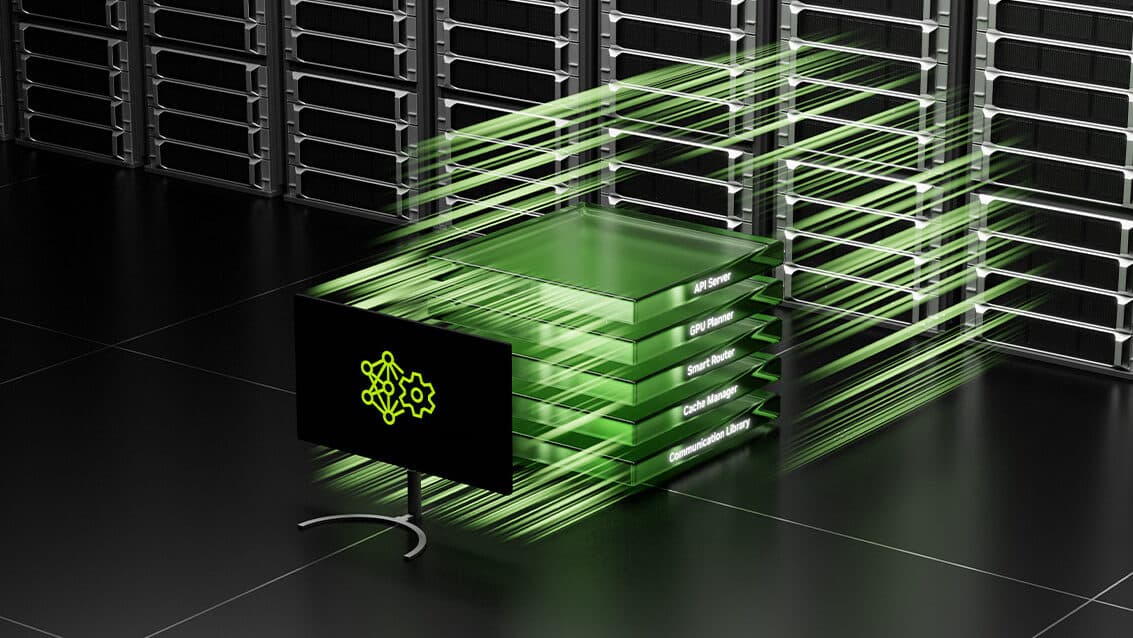
Topology-Aware Workload Scheduling with NVIDIA Topograph
Distributed AI workloads rely heavily on high-bandwidth communication. NVIDIA Topograph automates cluster topology discovery, eliminating the need for manual snapshots. It gathers physical interconnect data (such as NVLink and InfiniBand) from cloud APIs or on-premises networks and dynamically generates Kubernetes node labels or Slurm configurations. Working with KAI Scheduler or Slinky, it enables schedulers to place tightly coupled jobs within the closest physical GPU domains, reducing network contention and boosting efficiency.
 06NVIDIA DeveloperRobotics
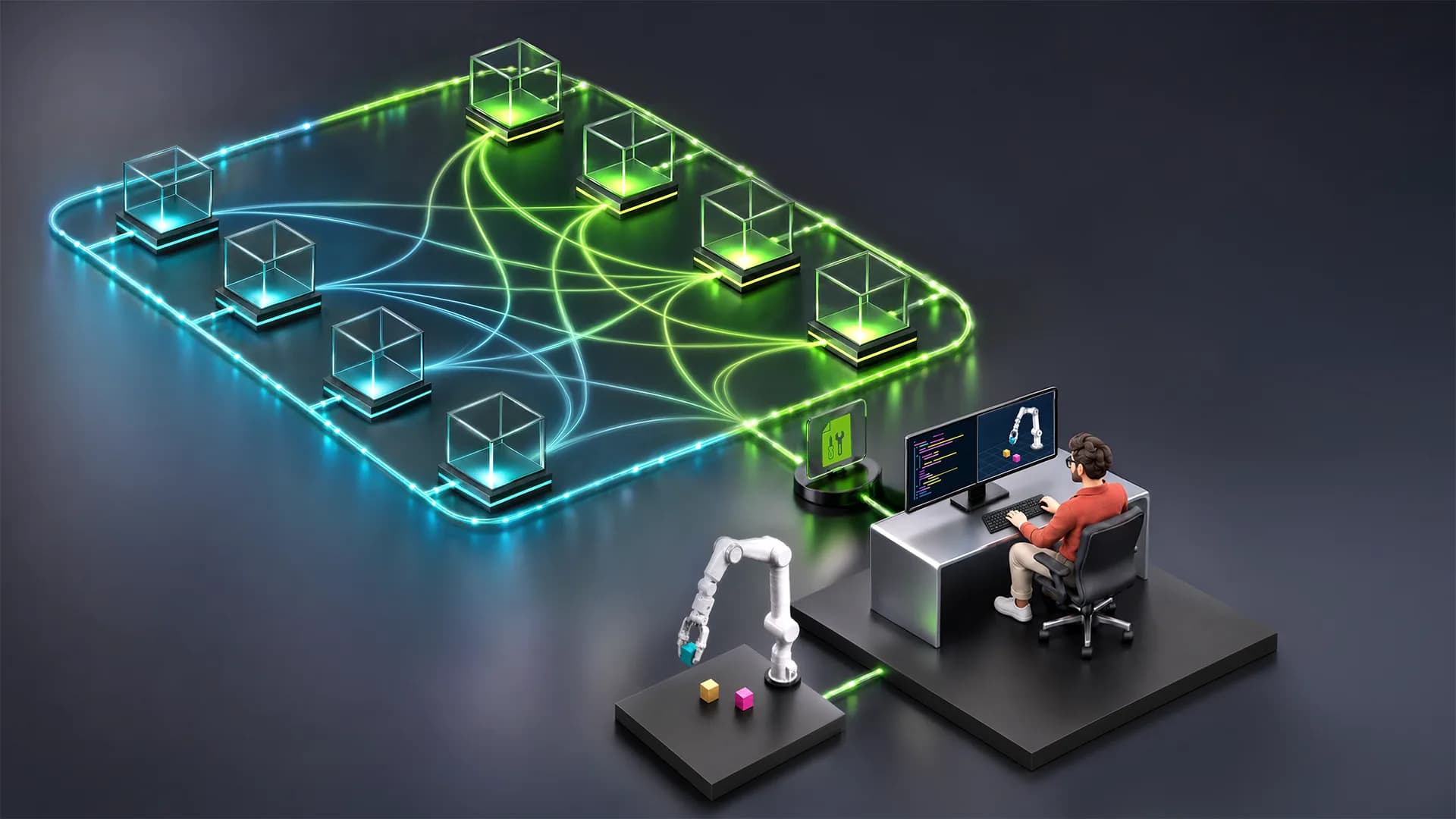
Accelerating ROS 2 Nodes with AI Agents and NVIDIA Isaac ROS CUDA Buffers
Even with fast GPU kernels, ROS 2 data transfer often suffers from CPU-memory copying and serialization bottlenecks. NVIDIA's CUDA buffer backend in ROS 2 Lyrical solves this by enabling co-located nodes to exchange GPU-resident data directly. To simplify migration, NVIDIA Isaac ROS 5.0 introduces an AI coding agent skill that automatically audits and refactors existing CUDA-accelerated nodes (such as Depth Anything v3) to leverage CUDA buffers with minimal code changes, while preserving automated CPU fallback.
- 07arXivAI Research
DISCO: Overlapping Community Detection via Diffusion-Induced Spatial Attention
Traditional Graph Neural Networks (GNNs) rely on local message passing, which often smooths out community boundaries and limits long-range structural representations. To solve this, researchers developed DISCO. DISCO integrates structural priors from influence spreading dynamics, sparse multi-head attention, and non-negative community-affiliation learning. Utilizing a Bernoulli-Poisson edge-reconstruction objective, it infers overlapping communities from node attributes, structural profiles, or both, proving highly effective in tasks like cybersecurity temporal anomaly detection.