AI Daily ·
AI Daily: Queen Chess Model Reaches Grandmaster Level Alongside NVIDIA OpenShell and DLSS 5
今日 AI 重點
Today's AI highlights feature major breakthroughs across multiple domains: Queen, a 4B chess-language model, achieves Grandmaster-level play (Elo 2697) with coherent explanations. NVIDIA introduces OpenShell for secure runtime sandboxing of AI agents, alongside DLSS 5 featuring 3D-guided neural rendering. Additionally, EyeRobot 2.0 enables precise bimanual robotic manipulation without wrist cameras, showcasing significant advancements in embodied AI and automation.
- 01arXivAI Research
Less Decoder is More Encoder: Extracting Robust 3D Geometric Representations via Novel View Synthesis
Novel View Synthesis (NVS) should theoretically teach models 3D geometry, but current encoders learn poor representations. The authors identify two main culprits: spatially expressive decoders that offload spatial reasoning from the encoder, and low-level pixel reconstruction targets. They introduce SNAP, a self-supervised transformer that employs a constrained 'pose-conditioned local decoder' and a latent-space reconstruction target. By bottlenecking the decoder, SNAP forces the encoder to learn rich geometric representations, achieving outstanding performance across visual localization, depth estimation, and robot manipulation tasks.
- 02arXivRobotics
EyeRobot 2.0: Precise Robot Manipulation via Active Gaze Without Wrist Cameras
Traditional robot manipulation relies heavily on wrist cameras, which add hardware overhead and fail during occlusions. EyeRobot 2.0 introduces Active Visual Fixation (AVF) using a single stereo camera that swivels to physically center its gaze on 3D points, processing images foveally by focusing visual tokens on the center. Trained hierarchically via RL and BC, EyeRobot 2.0 outperforms passive stereo by 40% in real-world trials and even beats wrist-camera systems when grasped objects cause visual occlusions.
- 03arXivAI Research
Queen: A 4B Chess-Language Model that Plays at Grandmaster Level and Explains Its Moves
While traditional chess engines play flawlessly but cannot explain their moves, standard language models can write explanations but lack playing strength. To bridge this, researchers built 'Queen,' a 4B chess-language model. By linking a silent expert chess encoder to an instruction-tuned LM via cross-attention, and optimizing via an iterative distillation algorithm mimicking the Bellman update, Queen boosted its Elo from 1782 to 2697 over 7 iterations. It achieves Grandmaster-level play alongside natural, highly coherent strategy explanations.
- 04arXivAI Coding
FrugalEvo: Cost-Aware LLM-Guided Program Evolution via Dual-Model Collaboration
Traditional LLM-guided program evolution focuses on performance over fixed iterations, ignoring high API costs. FrugalEvo introduces cost-awareness to this process using a dual-LLM approach: a stronger, higher-cost LLM (e.g., GPT-5.6 Terra) conceptualizes high-level strategies, while a cheaper LLM (e.g., Luna) implements and refines the code. By optimizing prompt design to maximize KV cache reuse, it drastically cuts API expenses. To evaluate efficiency under a budget, the authors propose the Budget-Aware Area Under the Curve (BA-AUC) metric. In tasks like circle packing, FrugalEvo achieves state-of-the-art results for just $0.55–$1.68, down from the ~$50 spent by multi-agent baselines.
- 05arXivAI Research
Pivot-SD: Efficient Self-Distillation for Masked Diffusion Language Models
Masked diffusion language models (dLMs) struggle with credit assignment during post-training, as only a few critical denoising commitments (pivots) determine the final output's success. Pivot-SD solves this by using an information-gain metric to isolate these high-impact pivots. Pivots from successful trajectories are trained using cross-entropy, while those from failed trajectories are optimized using targeted unlikelihood, leaving the rest of the sequence untouched. Using only 200 training questions with four rollouts each, Pivot-SD outperforms full-sequence SFT and budget-matched RL baselines on math and code tasks.
 06NVIDIA DeveloperAI Safety
NVIDIA OpenShell: Enforcing Secure Runtime Controls and Sandboxing for AI Agents
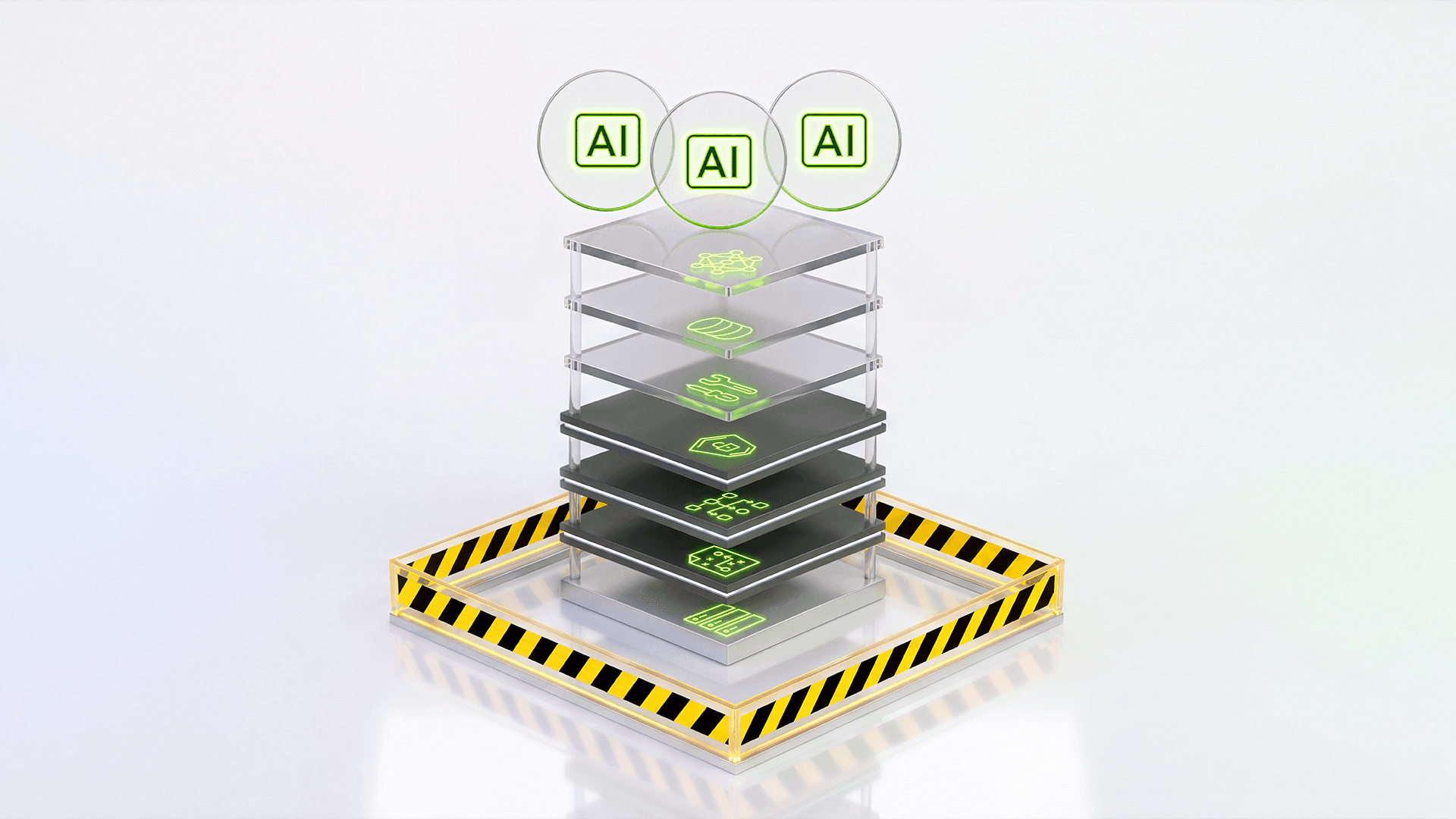
While autonomous agents offer massive potential, giving them broad systems access introduces severe risks. NVIDIA OpenShell 0.1.0 mitigates this by placing runtime controls completely outside the agent's workload. Comprising a Gateway, Supervisor, and Sandbox, it provides kernel-level file isolation and deep-packet API inspection. OpenShell keeps actual credentials outside the workspace and uses formal policy logic to prevent agents from manipulating humans or AI reviewers into granting unauthorized privileges.
 07NVIDIA DeveloperAI Hardware
NVIDIA Unveils DLSS 5 with 3D-Guided Neural Rendering, ACE Updates, and RTX Kit Upgrades
NVIDIA introduced DLSS 5, featuring 3D-Guided Neural Rendering that runs locally on GeForce RTX 50 Series GPUs to deliver deterministic, temporally stable up-to-4K visuals. Already utilized in *NBA 2K27* to enhance skin and lighting while preserving geometry, DLSS 5 is accompanied by ACE suite updates (Nemotron Speech 3.5 Streaming and Qwen3 TTS) and upgraded RTX Kit (including RTX Mega Geometry 2.0) to streamline high-density mesh streaming for upcoming titles like *Gears of War: E-Day*.
 08Hugging FaceLLM
Falcon-Emirati-7B: Bridging the Gap in Emirati Arabic Dialect and Culture
While generic LLMs understand Modern Standard Arabic (MSA), they fail to grasp local Emirati Arabic, which relies heavily on spoken idioms and Nabati poetry. To solve this, developers built Falcon-Emirati-7B on the Falcon-H1 hybrid architecture (Mamba + Transformer). By blending crawled forum text, cultural MSA literature, and guarded synthetic data, the model achieved 84.83% accuracy on the Alyah benchmark and proved unique in its ability to actively respond in natural dialect rather than defaulting to MSA.
- 09arXivAI Research
4DCodeBench: Benchmarking AI Agents on 4D Inverse Graphics and Dynamic Scene Code Generation
4DCodeBench introduces a novel benchmark for 4D inverse graphics via code generation. Agents observe videos of dynamic events (like fluids, deformation, and fracture) and reconstruct them into executable graphics programs. Benchmark results reveal that models excelling at static reconstruction still struggle with simulating complex physical dynamics.
- 10arXivAI Research
What Should World Models Forget? Stratified Retention for Continual Adaptation
Traditional continual learning penalizes all forgetting, assuming ground truth is stationary. However, world models face non-stationary environments where outdated facts must be discarded. This paper introduces 'stratified retention,' categorizing knowledge by invariance timescale. While invariants like physics must never be revised, instance-specific facts must update dynamically. To evaluate this properly, the authors propose 'differential retention,' a metric pairing invariant regression testing with revision latency.