CSF: Contextual Safety Filtering for Text-Conditioned Motion Generators
CSF:結合場景語境的機器人動作生成安全過濾技術
Text-conditioned motion generators produce whole-body motions but lack scene-aware safety, making it hard to distinguish benign actions from unsafe ones like striking a person. CSF solves this without model retraining by grounding natural-language safety rules into safe and unsafe reference trajectories. It then enforces these rules using a Control Barrier Function (CBF-QP) filter. Evaluated on four pretrained models and a Unitree G1 humanoid, CSF reduced danger events by up to 90% while preserving 88–100% of harmless motions.
Key points
Context-Aware Safety
Evaluates motion safety dynamically based on environment context like nearby humans or objects, bypassing fixed geometric or text-only filters.
Training-Free Framework
Operates directly on existing pretrained generators without requiring extra model fine-tuning or labeled safety datasets.
CBF-QP Real-Time Enforcement
Employs Control Barrier Function QP formulation to enforce strict safety boundaries while remaining faithful to the original target motion.
High Danger Reduction Rate
Reduces danger-event rates by up to 90% across four generator architectures while preserving 88–100% of benign motions.
How it works
Why it matters
As humanoid robots deploy into human-centric environments, implicit safety rules cannot be fully captured by text prompts alone. CSF bridges semantic safety specifications with control theory, providing a plug-and-play safety layer for real hardware like the Unitree G1 without costly retraining.
Who it affects
- AI Developer
- AI Researcher
- Enterprise Leader
How to use it
- 1Real-time collision prevention for humanoid robots interacting with humans in homes or factories
- 2Translating high-level semantic safety rules into hard low-level control constraints for motion execution
Limitations & caveats
- Relies on the generator's ability to produce representative safe and unsafe reference trajectories for grounding
- Real-time CBF-QP optimization may encounter computational bottlenecks or infeasibility in highly dynamic or cluttered environments
Related
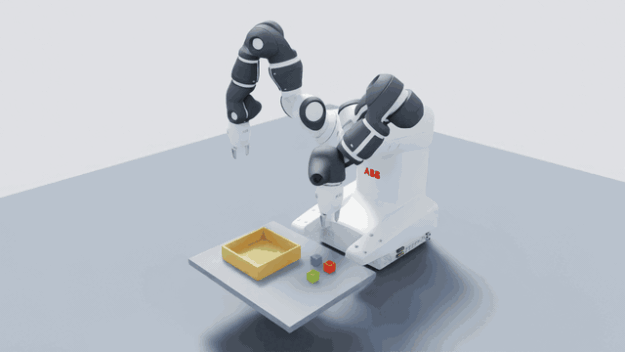
5 Steps to Build SimReady Robotics Assets with Frontier AI Models
5 步驟建構 SimReady 機器人資產:結合前沿 AI 模型與 NVIDIA Omniverse
A structured 5-step workflow leveraging frontier AI agents to convert, configure, and validate CAD assets into physics-ready SimReady robotics models inside NVIDIA Isaac Sim.
A Balanced Data Diet: Success Guided Sampling for Mega-Scale Robot RL
超大規模機器人強化學習的平衡數據飲食:成功引導採樣 SGS
Success Guided Sampling (SGS) focuses RL training on task configurations at the frontier of a robot's capabilities, preventing wasted compute in million-environment parallel simulations.
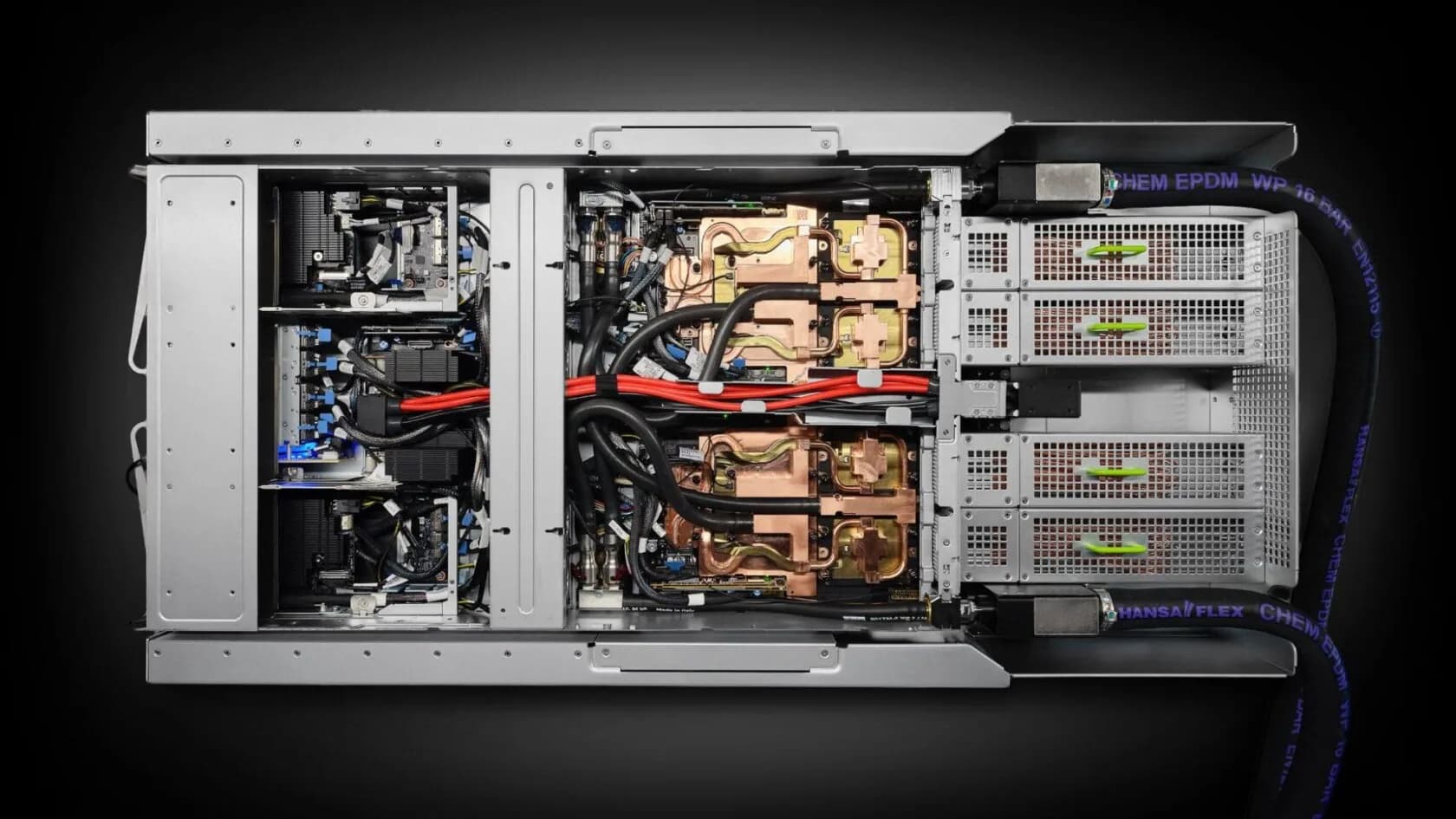
The Machines That Make the Machines: How NVIDIA Automates GB300 Tester Tray Assembly
機器造機器:NVIDIA 如何用 AI 與實體控制自動組裝 GB300 測試托盤
NVIDIA Seattle Robotics Lab shares insights from automating GB300 superchip tester tray assembly, highlighting the synergy between classical control engineering, smart mechanical design, and RL.